
The Blake Project, the brand consultancy behind Branding Strategy Insider, delivers interactive brand education workshops and keynote speeches designed to align marketers on essential concepts in brand management and empower them to release the full potential of the brands they manage.
Category: Private Label
Consumers are definitely giving retailers permission to grow their private label brands. The real question is will retailers grow private label brand value or simply grow more private labels? In the age of mega-private label brands, this trend is giving national consumer product goods brand managers some added anxiety these days. It also presents some relationship challenges for retailers to grow the value trusted CPG brands bring to their customers.
According to a report published by consulting firm Deloitte, consumer’s perceptions and attitudes toward private label brands are changing significantly; and offers insight into the notion that spending less for private label brands doesn’t mean consumers are settling for less from private label brands. According to the report only one-third of the respondents endorsed the statement “ I often feel that I am sacrificing when I purchase a store brand instead of a national brand”. This is no surprise when one stops to think that many consumers today believe that store brands and national brands are essentially made of the same ingredients. According to the report, 80 percent believe the statement “most store brands are manufactured by the national brands”.
The report further suggests that the current economic climate has made consumers more discerning about the brands they prefer. 75 percent of respondents agreed “ these economic times have made me more aware of which brands I care about and which ones are less important to me”.
Read MoreHeinz Private Label Strategy Proves Masterful
By Mark RitsonDavid Jason's voice wafts into British living rooms as images of everyday life fill the screen. 'Some things in life just have to be,' he intones. It's not meant to be prize-winning creative work. It's the latest part of Heinz's increasingly successful strategy to fight private labels. The food giant offers a playbook on how to survive and prosper in an age of own-label brands.
First you must focus. Heinz might be famous for its '57 varieties', but that was a portfolio for a long-lost age, when stores sold your brands, rather than competed via offerings of their own. Today, Heinz manages a tight global portfolio in which 15 brands account for 70% of sales. In the UK, that portfolio includes the Lea & Perrins and Weight Watchers ranges. Like the rest of the Heinz stable, these brands have been selected on three criteria: strong brand equity, top two in terms of market share and operating in categories in which private label is relatively weak. Former cash cows such as Linda McCartney's range and StarKist tuna, which failed these tests, have been jettisoned.
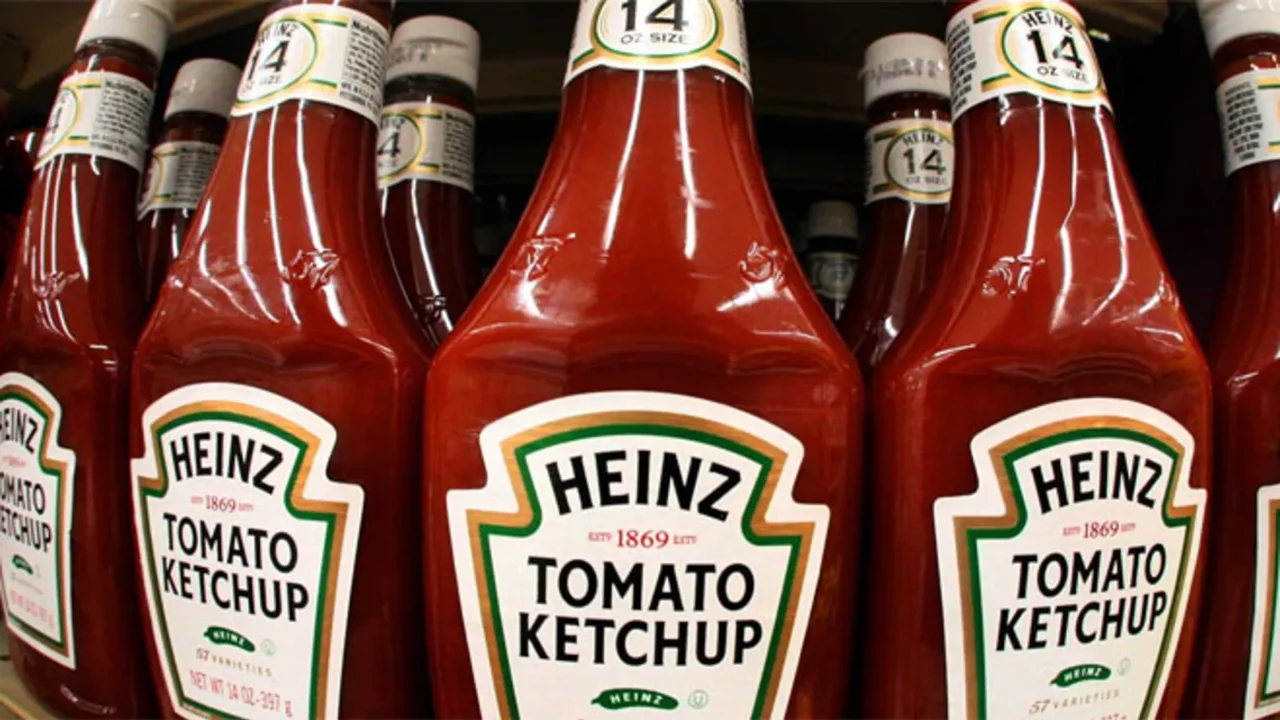
The resulting slender portfolio allows Heinz to focus marketing and research and development resources on the brands with the most profit potential. The strategy hinges on Heinz being able to build and maintain equity in these brands. The 'It Has to Be Heinz' campaign is designed to do that by making Heinz products as familiar and trusted as Jason's mellifluous voiceover – and it's working. Heinz Tomato Ketchup consistently appears as the brand that British consumers least want to give up, followed by Heinz Beanz. Despite attacks from Tesco's various ketchups, a rejuvenated Sainsbury's version and Aldi's deep-discounted sauce, Heinz still has a 75% share of the category. Nobody has that kind of share anymore – especially when the product costs up to four times more than own-label rivals.
Read MoreSo, do you fancy yourself as an expert on branding? You should have no problem with the following question, then. What's the biggest fast moving consumer goods (FMCG) brand in America?
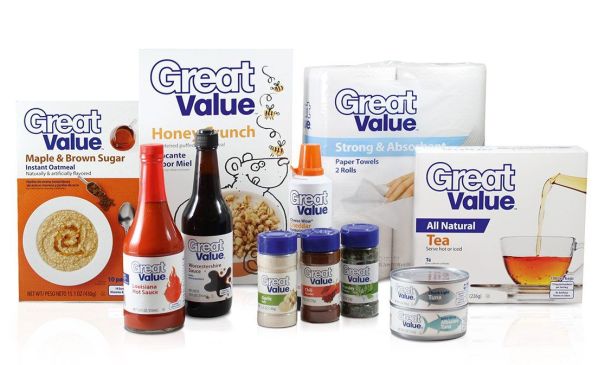
The answer isn't Coke, Gillette or J&J – it's Great Value, Wal-Mart's own-label range. Thanks to its presence in every one of Wal-Mart's 4100 US stores, and the fact that more than 5000 stock-keeping units are sold under the Great Value label, it is the biggest grocery brand in the US by both sales and volume.
And it's about to get a lot better.
Wal-Mart has announced the conclusion of a year-long project to improve the appeal of its own-label line. The world's biggest retailer doesn't do anything on a small scale, and has conducted 2700 consumer tests to guide the overhaul. The result is a range of product introductions, improved formulations and fresh packaging.
It's a massive strategic operation, but one that was long overdue. Own-label success has never been one of the items on Wal-Mart's astonishing list of achievements. Currently, only 16% of its sales come from this area. That's well behind other US food retailers such as Krogers and Safeway, which attribute about a quarter of their sales to own-label products. It's even punier when contrasted with Tesco, which earns half its sales from own-label, and Aldi, where the figure is 94%.
Read MoreWhy Retailers Call The Shots
By Mark RitsonThe news that Microsoft has hired a senior Wal-Mart executive to spearhead a move into retail will not come as much of a shock. These days retailers run the world, and companies like Microsoft, which have typically supplied big retail, are now increasingly drawn to the idea of opening up for themselves. The marketing advantages are great.
First you keep the margins that retailers usually extract from you. You also gain access to a mass of consumer data in real time. It is worth remembering that big manufacturers such as Cadbury and Unilever have absolutely no idea who is buying their products. That data belongs to the retailer and it provides an enormous strategic advantage in the factious negotiations that occur between supplier and store.
When Procter & Gamble bought a stake in online retailer Ocado, it was the opportunity to access this kind of data that motivated the investment. Without it even the biggest, smartest manufacturers are flying blind.
Direct access to consumers also enables a company to build a stronger brand. It is hard to build and protect the brand equity of a consumer good when you are a small packet of powder on a shelf that someone else is ultimately in charge of. But retailers have it much easier. When consumers enter their store they enter a house whose every element can, and is, directly controlled by the retailer.
The people, the setting, the atmosphere, the products, the in-store promotions, the experience – all can be used to build brand to consumers.
Read MoreThe typical format for managerial learning at a business school usually involves students working on case studies during their classes.
This approach often guarantees a much richer learning experience than the lecture format.
The classic criticism of the case study method, however, is that it encourages managers to believe that any problem can be solved. In fact, many strategic problems are intractable. Sometimes the biggest managerial skill of all is to learn which battles to avoid fighting in the first place, rather than to contemplate how every battle may be won.
I was reminded of this issue last week. I was wrapping up my brand management course with a session on private labels. Private labels, own-brands or store brands, have always been with us. From their origins as 'recession brands' in the 50s, through to their evolution into premium-priced luxury alternatives, consumers have always had a private label option.
Private label now counts for half the transactions in most leading supermarkets in the UK. In many categories its relative share of the market continues to grow.
The intriguing question from the manufacturer's point of view is what to do about this growth. There are a number of options, but none of them appear to be able to stem the tide. The classic approach, adopted by Coca-Cola, was to fight the threat of store colas by focusing even more heavily on brand. The 'Always Coca-Cola' campaign was a direct response to the threat of own brand.
Read More