avatar_48x48
Contact BSI
Derrick Daye
888.706.5489 Email us

Category: Personal Branding

Personal Branding

Branding Debate: Are People Brands?

By

480_michael_phelps2009-03-12-1236889159
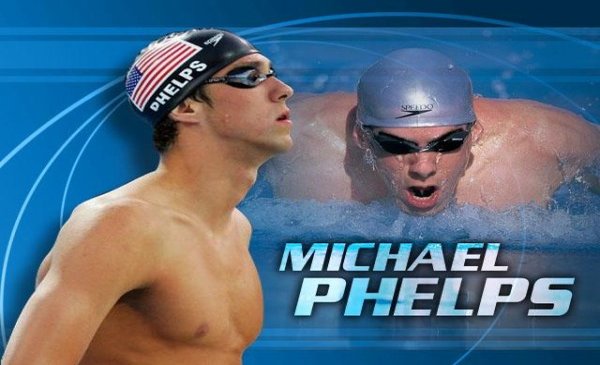
Back in February we touched on Michael Phelps and celebrity endorsements. The topic brought to light varying opinions on people as brands. Are they? I asked a few colleagues.

Mark Ritson: No
It's a common error to assume that people, countries and cities are all brands. Yes, they all possess symbolic meaning but as I point out in my post so do road signs. The point is that brands are more than just a cluster of meanings. On the consumer side you have to be able to purchase them and own them, on the organisational side you have to be able to control and alter them if you so choose. Neither applies to people.

Take Michael Phelps. Do you own him when you buy a box of cereal with is name on it? Could we reposition Phelp's personality and talents if we decided a strategic review was needed – perhaps into an intense soccer player?

Put it another way. We have an extensive academic body of work on celebrity endorsement in the Journal of Consumer Research for example, starting with the superb work of Grant McCracken. We also have an extensive and empirically verified series of papers on Co-Branding published in journals like the Journal of Brand Management. Even a cursory look at these two literatures confirm that the relationship between two brands, and between a celebrity and a brand, are entirely different. If we were to accept the premise of celebrities as brands we would have to unite these two disparate literatures somehow.

There is a final and most important rationale for rejecting people as brands. To do so would be to commit what Marx called "the commodification of self". When we turn people into brands their humanity is lost. Yes we use people to sell brands, but when we start to use the literature on brands to sell people we forget the essential humanity that sets apart people from things.

Read More
Endorsements Personal Branding

The Michael Phelps Endorsement Factor

By

480_michaelphelpswatchchoices-1218877359
Open the big book of celebrity endorsement scandals, it's time to make another entry. Swimming star Michael Phelps was just having a bit of fun last November while visiting his girlfriend at the University of South Carolina when, along with all the shots and beer he consumed at a house party that weekend, he also had a toke on a bong that was being freely passed around.

Phelps had probably forgotten all about this weekend until the photo of his bong hit appeared on the cover of the News of the World last weekend.

The reaction was immediate. USA Swimming banned Phelps from competition for three months and the media reported that his lucrative sponsorship deals would almost certainly dry up.

That prediction came true as Kellogg announced it would not renew its tie-up with the star. The reaction of Kevin Adler, founder of Chicago sports marketing firm Engage Marketing, was typical of the expert commentators. 'Athletes are brands. If you do something that runs contrary to your brand image, it will affect your ability to monetise that brand image. It really is that simple,' he concluded.

No, it really is not that simple. For starters, Phelps is not a brand. He is an athlete who, through association with brands, can confer meaning. People, no matter how famous, are not brands. Yes, they have symbolic meaning, but so do road signs and mythological gods, and no one is confusing them with brands.

It would also be a mistake to assume that Phelps' actions will damage his reputation.

Read More
Mark Ritson Personal Branding

Mistaking People For Brands

By

People Brands Russell Crowe

Building brands a hundred years ago was hard work. Back then, consumers were uncomfortable with the idea of identifying with products and companies.

As a result, early pioneers of consumer branding often created a fictional identity to personify the brand to make it easier for consumers to relate to them.

In 1921, for example, US food giant General Mills invented Betty Crocker as the personification of many of its brands. It created a kitchen, a portrait, even a signature for its all-American homemaker. It was a strategy many brands adopted. Consumers were encouraged to form relationships with fictional characters from Aunt Gemima, the African-American face of pancake mix, to the Marlboro Man. In so doing, they also formed relationships with the brands that sponsored them.

As consumer culture evolved, the vocabulary of branding became increasingly anthropomorphic. Consumers 'adopted' brands, built brand 'relationships' and eventually became brand 'loyal'. Words once reserved for personal relationships were increasingly applied to material goods. Consumers grew adept at identifying directly with brands.

Recently, we have entered a third stage in this process. Not only are consumers comfortable relating to brands, they have now begun to use the language of branding to help them relate to themselves and to others.

Read More
Brad VanAuken Personal Branding

Personal Branding

By

I have been asked on occasion to help people with their ‘personal branding.’ While I am always happy to help, this request does seem a little bit odd to me because I define a brand as the personification of an organization or of its products or services. This is what allows a brand to build relationships and emotional connections with its customers. It is also what allows a brand to make promises (of relevant differentiated benefits) to its customers. So, when someone asks me to help brand him or her, I think he or she is asking me to help him or her to become a more authentic and compelling human being, which is actually a worthwhile request.

“My general formula for my students is ‘Follow your bliss.’ Find where it is, and don’t be afraid to follow it.”  Joseph Campbell, The Power of Myth, pp. 120, 149

“I have learned this at least by my experiment: that if one advances confidently in the direction of his dreams, and endeavors to live the life he has imagined, he will meet with a success unexpected in common hours.”  Henry David Thoreau

“Watch your thoughts; they become words.
Watch your words; they become actions.
Watch your actions; they become habits.
Watch your habits; they become character.
Watch your character; it becomes your destiny.” 
Frank Outlaw

I took a course entitled Self-Assessment and Career Development while at Harvard Business School. It was the most useful course I took while there. The premise of the course, from alumni research, was that those who most loved what they did succeeded the most, regardless of what it was that they did. So, when asked to help a person brand him- or herself, I focus on helping him or her discover what energizes and what enervates him or her.

Read More

Get Two FREE Chapters Of Brand Aid

Subscribe to Branding Strategy Insider Now and get regular updates and two FREE Chapters of Brad VanAuken's best selling book Brand Aid direct to your inbox.

  • Rare Overview of the Entire Brand Management Process
  • Analysis of the 40 Most Common Brand Problems
  • 17 Checklists Covering All areas of Brand Management
  • The Indispensable Guide for Building Strong Brands
Subscribe

Your information is Safe and will never be sold, traded or shared.