
avatar_48x48
Contact BSI
Derrick Daye
888.706.5489 Email us

Category: Luxury Branding

Luxury Branding

The Anti-Laws Of Luxury Marketing #24

By

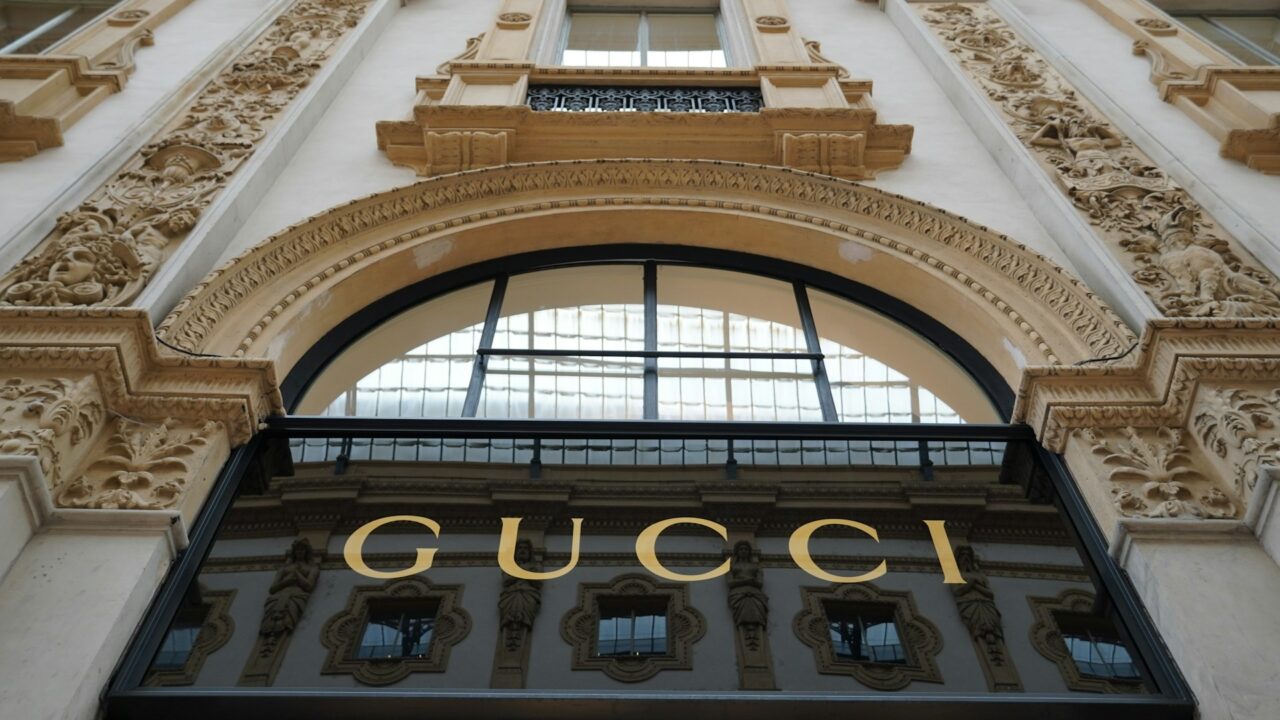
24  Just sell marginally on the Internet

Selling on the Internet is strictly hype in luxury marketing. Many marketers seem to think 
that if you do not sell on the Internet, you are ‘out’. There, the distinction 
between luxury, fashion and premium strategy of prestige brands operating 
on the luxury market is crucial. Internet sales are extremely well adapted to 
fashion and premium, but not to luxury. Self-proclaimed ‘web specialists’ 
fault the luxury companies for not selling online, forgetting – or ignoring – that all the ‘plusses’ of digital trade (instantaneity, permanent change and 
actualization, availability, accessibility, price reductions, automation of service, crowdsourcing, etc.) are huge ‘minuses’ for luxury. Luxury purchase needs time and effort to be deserved, true price and no discounts on excessive prices, one-to-one relationships with the salespeople and not with a machine, feeling of belonging to a ‘club’ of selected people and not being part of an anonymous crowd. The Internet can be used as a complementary service for existing customers, or as initiation to the brand story or to the product for potential and selected new customers. It cannot be used as a selling tool, except for products that are not part of the luxury strategy of the brand, such as fashion lines or entry products.

Contributed to Branding Strategy Insider by: JN Kapferer, excerpted from his book, The Luxury Strategy with permission from Kogan Page publishing.

See all of the Anti-laws of Luxury Marketing here.

Sponsored byThe Brand Positioning Workshop

Action vs. Reaction:  The Un-Conference: 360° of Brand Strategy for a Changing World
Featuring John Sculley May 16-17, 2013 in San Diego, California
A unique, competitive-learning workshop limited to 100 participants
As in the marketplace — some will win, some will lose, All will learn

FREE Publications And Resources For Marketers

Read More
Derrick Daye Luxury Branding

The Anti-laws Of Luxury Marketing #23

By

Luxury Brand Strategy Rodeo Drive

23  Do not look for cost reduction 

Creating value is the motto in luxury marketing. But this value creation must not come from cost reduction. It must come from added value. Being creative is not enough to sustain a systematic price increase - which is the key issue in luxury. For example, brands need lots of creativity in a low-cost industry to reduce costs and invent new business models, sell at a significant lower price than competition, and be profitable – but this is the job of the CEO. Luxury brands 
need lots of creativity in the fashion industry to keep selling at the same 
price point – but this is the job of the designer. In luxury, you must install 
the whole company in the creating value process: luxury value creation does not rely only on the talent of a creator, but on each employee of the company:

• Production people: lots of new ideas originate on the workshop floor. This is the reason why a luxury company must make its products and not relocate production – creation teams live in symbiosis with artisans.

• Sales staff: new ideas come from customers – not by pandering to their wishes, but by understanding their dream. This is why you must have your own sales staff (they are fully part of the company) 
and why they must be local – the customer must be able to talk in 
his or her language with sales people sharing his or her culture.

• And, of course, top managers must lead the value creation process.

Contributed to Branding Strategy Insider by: JN Kapferer, excerpted from his book, The Luxury Strategy with permission from Kogan Page publishing.

See all of the Anti-laws of Luxury Marketing here.

Sponsored ByThe Brand Positioning Workshop

FREE Publications And Resources For Marketers

Read More
Luxury Branding

The Anti-laws Of Luxury Marketing #22

By

Brand Strategy Alienware

22  Do not implement group synergies

Implementing group synergies is one of the most obvious ways to improve the net financial result of a brand. But, as Ford discovered with Jaguar and GM with Saab, in luxury, it is the best way to destroy the dream of the brand. For some pennies saved, you lose your pricing power – one of the strongest points of a luxury strategy. This is well known in the luxury market – as proven by the number of luxury brands that have been almost eliminated by group synergies implementation — where improving the net financial result is the ultimate goal.

Luxury brands face this threat each time one is acquired 
by an organization who does not understand luxury strategy. One example is Dell’s acquisition of Alienware in 2006. Founded in 1996 in Miami, Alienware was the success story of luxury gaming laptop and desktop computers. In 2005, Alienware had a net profit of $170 million. To improve on already strong profits, Dell decided to reduce production costs. This was counter to Alienware's business strategy which had built its success on using the best elements among all suppliers – whatever the cost. A strategy which earned the brand thousands of passionate and loyal customers. Discounts were never offered nor needed. Willing to implement ‘group synergies’, Dell cancelled all of the agreements with top-end suppliers, relocated production to Poland, created new distribution agreements and offered discounts on the corporate website. The result: Alienware remains a premium brand, but has lost its aura - and its pricing power. This is why luxury groups such as LVMH maintain the independence of their brands as much as they can.

Contributed to Branding Strategy Insider by: JN Kapferer, excerpted from his book, The Luxury Strategy with permission from Kogan Page publishing.

See all of the Anti-laws of Luxury Marketing here.

Sponsored ByThe Brand Positioning Workshop

FREE Publications And Resources For Marketers

Read More
Derrick Daye Luxury Branding

The Anti-laws Of Luxury Marketing #21

By

Luxury Brand Strategy Angel

21  Do not look for consensus

Testing implies looking for consensus: any option could be chosen as long as 
it is elected by the majority of common consumers. In fact, intimacy with luxury 
decision makers teaches us that big success as a rule creates a lot of 
discussion within the company itself. This can be held as a working principle 
of luxury brand management. The key questions are: How to lead? Are consensual 
decisions the sign that it will be a lasting success or a temporary fad? 
Interestingly, in the perfume business – which is dominated by mass strategies – 
the most successful fragrance launch of the past 20 years, Angel, was chosen 
despite poor test results. Its success was driven by a minority of respondents 
that rallied around the product’s new and completely original scent. Religions start the same way: they succeed in creating a sect 
of militants and advocates. 

Contributed to Branding Strategy Insider by: JN Kapferer, excerpted from his book, The Luxury Strategy with permission from Kogan Page publishing.

See all of the Anti-laws of Luxury Marketing here.

Sponsored ByThe Brand Positioning Workshop

FREE Publications And Resources For Marketers

Read More
Derrick Daye Luxury Branding

The Anti-laws Of Luxury Marketing #20

By

Luxury Brand Strategy Jaguar

20  Do not hire management consultants

Management Consultants sell ‘do like others’. This is called benchmarking or also ‘best 
practices’. Using management consultants, formed in global MBAs to the universals of 
management, in this way would erode the specific characteristics of a luxury 
brand – and its ability to maintain its pricing power to this specificity.

Let’s take a dramatic example: any non-luxury automobile manufacturer 
should be obsessed by reducing costs. This is why industrial platforms strategies, sharing all back-office costs, are so widely spread. By the same token, 
relocations are nothing but normal for a mass brand and even a premium or 
super-premium one. When one buys an Audi every single dollar paid is to 
bring a return on investment: you pay for what you get (more functionalities, 
that is all). Now, should the same 
rules apply to a brand considered as luxury such as Jaguar? Once bought by 
Ford, a very well-managed traditional company, soon the cost consultants 
were hired, bringing with them methods which eroded the dream. Why 
would a reader of Forbes or Fortune still want to buy a Jaguar as a luxury 
car when reading in his journal how much Ford was doing an excellent job 
by sharing the Ford Mondeo structure and parts with some Jaguar models? 
This is how the Ford Company killed the dream and could not have Jaguar 
regaining its luxury status – and had to sell it to the Indian company Tata. And Tata is now returning to the luxury strategy for Jaguar, to turn around 
the brand.

By bringing methods from any normal economic sector, management consultants instill the poison of averaging everything. Luxury pricing power is not based on cost reduction but on added value and feelings of uniqueness.

Read More

Get Two FREE Chapters Of Brand Aid

Subscribe to Branding Strategy Insider Now and get regular updates and two FREE Chapters of Brad VanAuken's best selling book Brand Aid direct to your inbox.

  • Rare Overview of the Entire Brand Management Process
  • Analysis of the 40 Most Common Brand Problems
  • 17 Checklists Covering All areas of Brand Management
  • The Indispensable Guide for Building Strong Brands
Subscribe

Your information is Safe and will never be sold, traded or shared.