avatar_48x48
Contact BSI
Derrick Daye
888.706.5489 Email us

Category: Line Extension

Brad VanAuken Branding: Just Ask... Line Extension

A Question Of Line Extension

By

480_bridal-dresses-1

We are happy to answer marketing questions of all types here on Branding Strategy Insider. Today, Sajid, a Marketer in Islamabad, Pakistan asks…

"Hi Brad and Derrick, I own a fashion house in Pakistan where we are currently offering, bridal and formal wear for the eastern market and by the grace of God it is going great. I am a frequent reader of Branding Strategy Insider and would like to have your guidance on the subject below:

We want to introduce another line of garments for a low price range buyer. Should we make a line extention of our parent brand for such product or should we continue to have the same line under our main brand. I have a fear that if we continue to have the same brand for this new product it might kill the image of our existing brand and people will not prefer to buy our high end product."

Thank you for your question, Sajid. You are right to be concerned about a less expensive line of products potentially changing the perceptions of a brand that sells higher end products. If you want your brand to remain a premium brand (assuming it is perceived to be that way today), it would be better to create some perceptual distance between it and the new line of less expensive garments. There are several ways to do this:

  • Create a new brand for the the less expensive garments and sell them in a separate store (assuming that your current store and product brands are the same and that they are associated with higher end formal wear and that you want the brand to continue to retain the association with formal wear)
  • Create a new brand for the less expensive garments and sell them in a different location in your store (assuming that your current store and product brands are the same and that it is acceptable to you to have the brand become more associated with the store itself and a broader mix of garments)
  • Create a separate store brand and separate brands for your formal wear garments and for your other lower priced garments and decide what you want each brand to stand for. Obviously, the store brand's perceptions will be driven by the type of merchandise sold in the store, including which brand or brands you decide to sell in the store.

If you make the new line of less expensive garments a sub-brand or line extension of your current brand, it will create a new perception of that brand, one that is less associated with formal wear and high end products and more associated with a broader mix of clothing. However, if you do this, you will have to determine what the brand now stands for and what makes it different from other clothing brands. I would not recommend this approach given your concerns. 

One final comment on your situation. It is not clear to me if your formal wear brand of products is the same as the store's brand. If it is, it will be difficult to sell different brands in the store without changing the perception of your brand. If you do this, you will need to be very careful about what other brands you sell in your store.

Have a question related to branding? Just Ask…

Sponsored byThe Brand Positioning Workshop 

Read More
Line Extension

Brands Weaken Through Line Extension

By

470_nissan-leaf-100410
 
In the last decade, we've had two wars (Iraq and Afghanistan), two automobile bankruptcies (General Motors and Chrysler) and two radically new social-media sites (Facebook and Twitter).
We've had a housing crisis, a banking crisis and a dot-com bubble. Three of our four leading airlines have gone bankrupt. And the fourth one (American Airlines) is losing money.

We've witnessed the incredible rise of Google and Apple. And the incredible fall of A.I.G. and Lehman Brothers.

"Everything has changed" is the message marketers have been reacting to recently. And because everything has changed, marketers believe they have to change everything in their marketing programs.

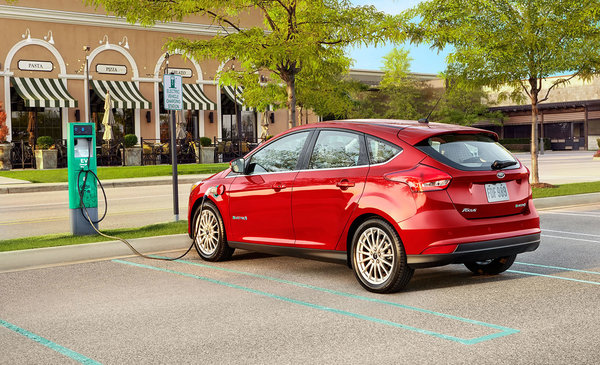
Take the automobile industry. Coming down the road at a rapid rate of speed is the electric car. Every major automobile manufacturer in the world is busy developing and introducing electric cars. Some recent announcements.

  • The Nissan Leaf
  • The Chevrolet Volt
  • The Mini E
  • The BMW Megacity
  • The Hyundai BlueOn
  • The Mitsubishi i-MiEV

In addition, Toyota, Honda, Daimler, Volkswagen and Audi have declared their intentions to introduce electric vehicles.

So the cry goes up, "Change the marketing. Let's let the world know our brand is the one that is pioneering the electric vehicle."

Witness the massive marketing campaign for the Nissan Leaf featuring the advertising industry's old, reliable spokes-animal, the polar bear.

The theme: "Innovation for all."

"The Leaf is the most recent example to believe that Nissan is an innovative company," said Jon Brancheau, VP-Marketing in a recent conversation with Ad Age.

Nissan and the other electric-car wannabes are missing a major opportunity. Nissan is a gasoline-engine brand. Not an electric-engine brand. And given the history of similar developments, it's going to be difficult to move the brand from one to the other.

Read More
Brad VanAuken Branding: Just Ask... Line Extension

Of Sub-Brands And Line Extensions

By

480_106605944_629f51e0fe

Today, another question from the BSI Emailbag. Cathy, a marketing executive from Auckland, New Zealand writes:

"I read your definition of Brand Architecture in response to Anton with interest, but I find it to contradict what you were saying only yesterday, about positioning a product that will take sales off an existing brand (your example Budweiser and Budweiser Light).  Perhaps if you could use the example of Budweiser and how to apply the rules of engagement to the brand it may clarify this for Anton and us all.  Perhaps if you could give us examples on each of the points and how if you were brand manager for Budweiser you would do it differently."

Cathy, thanks for your note. To clarify, you reference an earlier post by my BSI co-author Al Ries. To your question – line extensions can increase sales for a brand by making its products appealing to additional customer segments. The trick is for the line extension to make the brand relevant to new markets while not repositioning the core brand in a negative light and while not resulting in too many traded sales with the core brand. Poorly conceived line extensions can increase sales initially but then ultimately spread sales out over more sku's decreasing the brand's cost efficiency.

Read More
Line Extension

Line Extensions: Pulling Brands Off Course

By

480_bud-light-family4

"Would you like to steer the ship?" is a question I used to hear in the Merchant Marine.

The helmsman on duty would tell the neophyte, "Just take the wheel and keep the compass reading at 180," or whatever the course called for.

Steering a ship is not like driving a car. The ship drifts to the left, so the neophyte turns the wheel to the right to try to correct the course. But the ship keeps turning left, so the neophyte figures maybe he needs to do the opposite, so he turns the wheel to the left … and the ship turns to the right. Now he's convinced that he's got the hang of it, until the ship turns left again. After a while, the poor soul is convinced the wheel isn't connected to the rudder at all.

It takes time to turn a ship and it takes time to build a brand. If you want to turn a ship to the left, you turn the wheel to the left … and then you wait and you wait and you wait. Finally the ship turns to the left.

Marketing is like steering a ship. If you don't wait long enough for a marketing effect to run its course, you can draw exactly the wrong conclusion.

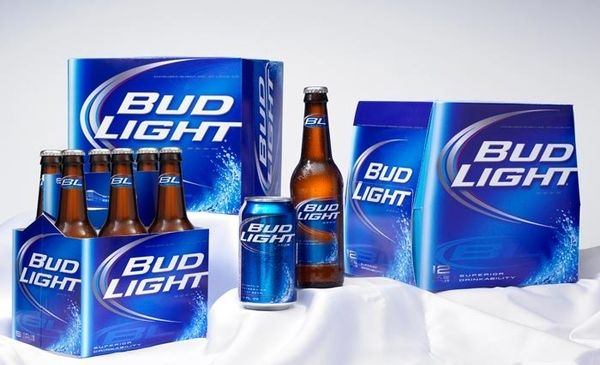
Take the 1981 introduction of Bud Light by Anheuser-Busch, virtually the last major brewer to introduce a light version of its regular beer.

Read More

Get Two FREE Chapters Of Brand Aid

Subscribe to Branding Strategy Insider Now and get regular updates and two FREE Chapters of Brad VanAuken's best selling book Brand Aid direct to your inbox.

  • Rare Overview of the Entire Brand Management Process
  • Analysis of the 40 Most Common Brand Problems
  • 17 Checklists Covering All areas of Brand Management
  • The Indispensable Guide for Building Strong Brands
Subscribe

Your information is Safe and will never be sold, traded or shared.