Search


  • WWW
    This Blog

  • Add to Technorati Favorites

About The Authors

  • Derrick Daye
    Managing Partner
    Email Derrick
    Derrick has spent the past 18 years helping organizations release the full potential of their brands. His experience is as deep as it is diverse encompassing the disciplines of advertising, branding, sales promotion and public relations. Most notably he has worked with the White House Press Corps, Johnson & Johnson and the National Basketball Association.

    Call The Blake Project - here's my cell:
    813.842.2260
  • Brad VanAuken
    Chief Brand Strategist
    Email Brad
    Recognized as one of the world’s leading experts on brand management and marketing, Brad wrote the best selling book Brand Aid, the first comprehensive practical, ‘how-to’ guide on building winning brands. A much sought after consultant and speaker, he writes extensively for the business press and academic journals and is regularly quoted in trade publications.

Categories

Top Posts

Recognition

  • TypePad Featured Weblog
  • Ad Age Power 150

    Featured in Alltop 9 Rules Member

December 20, 2008

Do Smaller Brands Have Better Marketers?

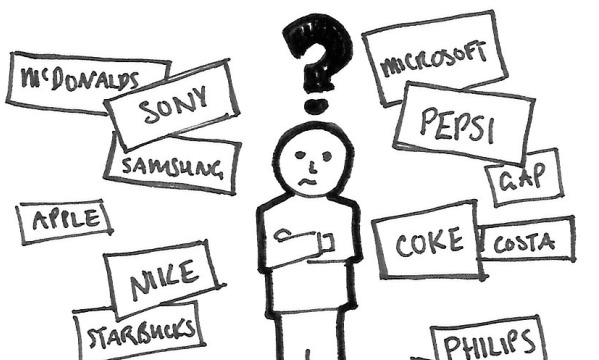
Management conferences are a wonderful place to learn and network. Rarely does a month go by without a major marketing conference taking place. Each time the organisers exclusively invite powerbrands with multi-million-dollar turnovers. It's a design I find a little troubling.

Organisers appear to be under the impression that the size of a company and the ubiquity of its brand are indicators of brand expertise. No such correlation exists.

It's the dirty secret of branding and one that only becomes apparent after a few years of marketing consulting. Anticipation and enthusiasm overwhelm you the first time you work in the marketing department of a company that owns one or more brands with a powerbrand pedigree. You gaze in awe at the logo as you enter the building. You make a point of telling friends in the pub at the weekend who you are working for.

It's only after a few days of the engagement that the shocking truth dawns on you: despite the big brand and the big budget, these people have absolutely no idea what they are doing with respect to marketing.

This is not to say that every famous brand is being run by marketing morons. Many powerbrands are hotbeds of leading-edge marketing thinking and practice. But equally as many are being run in inept or inefficient ways by unqualified marketers imported from senior positions in sales or engineering. You are as likely to find best marketing practice in a business-to-business software company with 50 employees as you are in any one of the organisations listed in Interbrand's annual survey of the world's most powerful brands.

Why the inconsistency? First, most powerbrands were built many decades ago. Despite the invisible halo that follows a marketer from Coca-Cola around the room, the chances of this individual being a skilled marketer are the same as any random marketing employee. Coke is a magical brand, but the marketing strategies that got it there took place more than half a century ago.

Continue reading "Do Smaller Brands Have Better Marketers?" »

November 02, 2008

Marketing's Best Toolbox Remains Elusive

A pipe bursts in your house. When the local handyman arrives, he is carrying a large toolbox. Without even looking at the pipe, he opens the box to reveal only one tool: a hammer. He takes it out and brings it crashing down on the broken pipe - for an hour. With the pipe destroyed, he asks for $100 and leaves.

This provides an accurate analogy for the state of the marketing communications industry. The fanfare that greeted the emergence of integrated marketing communications in the early 90s has died away, leaving the industry uncomfortably aware that it still represents a series of one-trick ponies. Advertising agencies still espouse solutions that centre on advertising, PR agencies always suggest PR, direct agencies suggest direct marketing and so on.

Like our handyman, each fails to diagnose the problem correctly and opts to solve all their clients' communications issues with one tool. Ask WPP chief executive Sir Martin Sorrell. Not too long ago he bemoaned the fact that most agencies "redefine every problem in terms of their proposed solution".

As Sir Martin knows, different communications tools have different strengths.

This has two implications. First, a company must completely diagnose the communication challenge before it assigns the communications tools to be used in its strategy. For many clients, tools such as advertising, PR or sponsorship will prove entirely ineffective no matter how well they are applied because they are wrong for the job. Second, by combining two or more communication tools into an integrated campaign, a company is likely to realise significant synergies.

Continue reading "Marketing's Best Toolbox Remains Elusive" »

October 31, 2008

Children vs. Obesity: Ban Ads or Tax Junk Food?

Recent research has shown that British (and American) children are getting fatter, suggested there is a link between childhood obesity and a slew of adult ailments, and revealed that 95% of food ads aimed at children promote brands that contain unhealthy levels of fat, salt and sugar.

Therefore, argue a number of food lobbying groups, by restricting unhealthy foods advertising to children we will reduce their consumption and thus improve the health of future generations.

Heady stuff. Charlie Powell from Sustain, an alliance of campaigners for better food, claims: "Advertising is designed to exploit children's vulnerabilities." Meanwhile, Kath Dalmeny from the Food Commission says: "Junk food advertisers know that children are especially susceptible to marketing messages. They target children as young as two with toys, cartoon characters, gimmicky packaging and interactive web sites to ensure they pester their parents for the products."

Darren Neville, editor of Consumer Policy Review, claims that children are "bombarded with marketing and advertising for what are often unhealthy foods".

We should take these arguments with a large pinch of (metaphorical) salt.

Continue reading "Children vs. Obesity: Ban Ads or Tax Junk Food? " »

October 15, 2008

Marketers Must Deter Corporate Arrogance

As I look back, the news that Sony would axe 20,000 employees as part of a three-year restructuring plan came as no surprise.

2003 had been a horrendous year for the Japanese powerbrand. Poor performance was the recurring theme across its music division, movie studio, audio-visual products and market-leading PlayStation brand, resulting in record losses and an imploding share price.

Sony's troubles were in direct contrast to many of its rivals. Samsung, LG and Matsushita all had reported increased sales and improved profitability.

So how did an apparently dominant market leader's fortunes become reversed in such an extreme manner in such a short space of time? And how is it possible that smaller, typically less successful competitors were suddenly able to seize the market initiative? The answer lies in the very strength that made the apparent decline of Sony so surprising. Sony was suffering from a corporate disease formerly known as Levi's Syndrome, Marks & Spencer's Condition and the IBM Ailment. The symptoms are always the same: take a ridiculously successful company, flushed with a host of marketing triumphs, a long-established track record of sales growth.

Then add a tiny dash of that fatal ingredient: complacency.

Continue reading "Marketers Must Deter Corporate Arrogance" »

October 10, 2008

Marketers: Bastards of the Business World

Four friends go out for dinner. One is an accountant, one is an engineer, one a financial analyst in the City, and one is a marketer.

Before you read on, close your eyes and imagine what each one of these dinner guests looks like.

The images you have just conjured up in your mind are probably very similar to the stereotypical images that most people have about different professions.

The accountant is boring. The engineer is a bit of a geek. The financial analyst is rich and greedy. And the marketer?

The marketer is more tricky.

Most industries acquire a stereotype for their employees over time. Marketers, however, still accrue a wide range of associations. While these associations are almost exclusively negative, they have yet to coalesce around a particular theme or identity. I call it the dinner party test. When someone inevitably asks me what I do, I tell them I am a professor. This is usually very positively received around the table. The inevitable second question, 'Of what?', then leads to the response, 'marketing'. I then encounter an almost tangible change in the atmosphere around the table, somewhat akin to the onset of a Russian winter. Silence ensues until someone finally clears their throat to compliment the host on the wine choice.

We are bastards you see. Bastards in both senses of the word.

Continue reading "Marketers: Bastards of the Business World " »

September 23, 2008

Marketing Budget Requests: Getting What You Need

This is the time of year when many marketing departments decide how their particular share of the industry’s enormous marketing spend will be applied in the following year.

In practice this means senior marketers make predictions for the coming year, perform an objective review of the performance of the previous year's expenditure and then finally allocate their spend across their chosen marketing investments.

The vast majority of firms still use a top-down budgeting system. Senior managers decide on the total marketing budget for the year and leave marketing to allocate it accordingly. This figure is usually calculated in one of two ways. In its most pathetic form, top-down budgeting involves senior management looking at last year's budget and then increasing it or decreasing based on expectations of turnover.

Or else they apply an 'advertising:sales ratio'. Senior managers estimate how much they expect to sell in the coming year and then apply a completely arbitrary percentage to this estimate. Thus the marketing budget is set.

The problems with a top-down approach should be obvious. It is non-strategic, takes no account of new initiatives within the company, and ignores changes in the external market.

Continue reading "Marketing Budget Requests: Getting What You Need" »

August 28, 2008

Ad Industry Blind to DVR Threat

In the pivotal scene of the epic movie Spartacus, Kirk Douglas, playing the eponymous renegade hero who has led an uprising of his fellow slaves against their Roman masters, now faces defeat at the hands of the Roman army.

The Roman general announces that if Spartacus identifies himself, he will be crucified, but his fellow warriors will be spared. As Spartacus begins to step forward, a slave next to him announces 'I am Spartacus', then another and another, until the whole battlefield echoes with the cry. Spartacus surveys the tragic scene with a mixture of wonder and doom.

Everyone will be crucified.

I had my own Spartacus moment a few years ago, while addressing a big group of advertising executives. One claimed that consumers welcomed advertising and saw it as interesting and valuable. Surprised by this, I asked for a show of hands to see who else believed in this positive perception of advertising. Arms were slowly raised skyward until the whole lecture theatre was a forest of defiant raised fists.

Ad agencies have spent decades convincing themselves that the production of advertising is a positive, welcomed experience for customers. Until the advent of the Digital Video Recorder this was a harmless delusion. With the introduction of the DVR, however, this rose-tinted view could blind them to the apocalyptic changes looming.

Continue reading "Ad Industry Blind to DVR Threat" »

May 10, 2008

Agency Leadership Advice

Nine years ago, when I knew I was going to become CEO of this company, I spent three days with its legendary founder, David Ogilvy, at his château in France. It was March, it was cold and rainy, and we spent the entire time indoors talking about the business. At one point I asked him a question point-blank: David, if you were going to say one thing to me, what would it be? He didn’t hesitate in his response. No matter how much time you spend thinking about, worrying about, focusing on, questioning the value of, and evaluating people, it won’t be enough, he said. People are the only thing that matters, and the only thing you should think about, because when that part is right, everything else works.

I spend part of every single day hearing David speak that advice, and as a result, I devote a huge amount of time to asking myself: Am I doing enough? Who at Ogilvy do I have to worry about? Who needs another challenge? Who seems a little stale? Who needs a new view on life or a new country to run? David’s advice drives not only how I think about and mentor people but also how I form business strategy and make critical decisions.

In 1991, we got fired by American Express. They took away the big, sexy stuff—the brand work, most of the television—and gave it to another agency, leaving us with the little co-op stuff, the joint promotions with service establishments. American Express had been with us since the early sixties, and at one point they were our largest client.

But, as David Ogilvy noted when he phoned me at home that Saturday to tell me, the truth is that clients come and go: You’ll always win another one, and another will go away.

Continue reading "Agency Leadership Advice" »

Partners

  • +2 marketing Consultants FREE Marketing Magazine Subscriptions Scent Marketing Institute CI Sense Free Subscription

Prefer email to a blog?

  • Sign up below and we'll send new posts to your email inbox. We'll never spam, sell or trade your address.

    Enter your email address:

    Delivered by FeedBurner

BSI on your Phone or Blog

  • Our Feed In A Widget

    Get this widget from Widgetbox
  • Our Feed On Your Phone

Featured Reading

2009 Brand Education Seminars


  • The Blake Project offers comprehensive seminars on many key branding topics. They are designed to educate and empower executives, brand managers and marketing professionals to release the full potential of their brands. Download 2008BrandEducation.pdf (675.2K)

Subscribe to the Brand Management Newsletter


  • A leading source for brand management insight, strategy and advice for marketing oriented leaders and professionals.


Follow BSI

Top Ten

  • Benefits of Building Strong Brands
    1. Increased revenues and market share
    2. Decreased price sensitivity
    3. Increased customer loyalty
    4. Additional leverage with vendors and retailers (for manufacturers)
    5. Increased profitability
    6. Increased stock price, shareholder value and sale value
    7. Increased clarity of vision
    8. Increased ability to mobilize an organization's people and focus its activities
    9. Increased ability to expand into new product and service categories
    10. Increased ability to attract and retain high quality employees