

As Subway’s Jared Fogle joins the pantheon of brand endorsers who’ve been dropped in a hurry for either real or alleged off-brand activities, it’s worth revisiting the risks and benefits of endorsement strategy.
When it works, it can work really well. Consider Michael Jordan’s relationship with Nike that spawned Air Jordan shoes. Or Betty White’s Snickers commercial which was a Super Bowl standout.
But Jared reminds us of the cast of celebrity endorsers who have become a sudden liability. Tiger Woods (Accenture/Nike/Buick), Oscar Pistorius (Nike) and OJ Simpson (Hertz) are just a few of the many representatives. An association with a real-life person carries the risk that that person’s real life will intervene in your carefully nurtured plans.
Should this possibility stop you using endorsers? No. As Subway has shown this time and other brands have shown before, as long as you react quickly and appropriately to situations as they arise, there’s little to no long-term damage to the brand. I can’t think of a single brand that’s been permanently damaged by its association with an endorser although Donald Trump is giving his own brand a real test right now.
A bigger issue is whether your endorsers are doing any good for your brand in the first place. Too often the endorsement route is just lazy marketing. That’s especially true in the case of celebrity endorsement when brands pay a lot of money to try and hitch a ride on a celebrity’s fame and hope some of it rubs off on them. In the worst case scenario, the people chosen are not a good fit, not credible, would never be seen using your product in real life and will be pitching all sorts of other things at the same time or soon after.
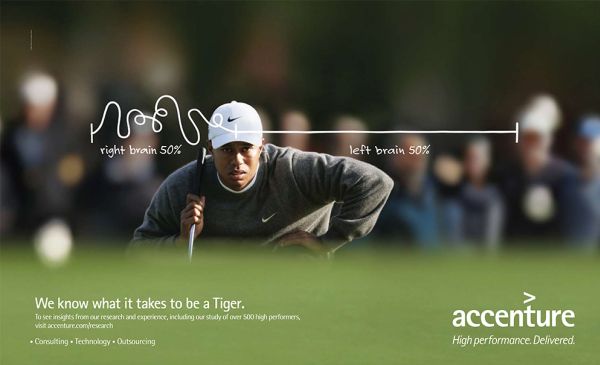
The better examples of endorsements are when the endorsers imbue the characteristics of the brand that you have or aspire to have and the association helps to emphasize those characteristics. When Accenture partnered with Tiger Woods (before he went astray and while his golf game was in good shape), the advertising was able to make strong connections between his golfing skills and the strengths of the company. Nike, with Tiger and multiple other top-performing sports personalities, has strengthened its brand through these associations.
Compare Tiger’s endorsements of Accenture and Nike with his endorsement of Buick. That one lacked credibility. It wasn’t believable that he’d drive one of their cars other than to the tournaments as laid out in the contract. Finding someone who is compatible in terms of personality and brand fit is worth the extra work and, of course, is a lot easier if your brand has some personality and distinctiveness to begin with.
Jared himself was an interesting case. He was no celebrity. There was no borrowed equity available. He just had a very compelling story to tell about losing 200 lbs. on a Subway low-fat sandwich diet. He was not a natural or gifted pitchman but he didn’t have to be—all he had to do was show his old 58-inch waist jeans and the point was made. All credit to Subway for integrating that story into the brand and using it to help the chain grow into the 3rd largest restaurant chain emphasizing a strong point-of-difference against McDonalds and other competitors. Apparently the company had tried to phase Jared out a few times over the years, but his ads had such a clear impact on sales they kept bringing him back.
Whether Jared is exonerated or not, his run at Subway is most likely now over. Brands are all about perceptions and any lingering association with the current child pornography investigation would be damaging for the brand. Subway has only suspended its relationship with him so far, not wanting to rush to judgment. That was the right thing to do but, most likely, it will now have to move on and come up with a new approach.
The Blake Project can help you discover the right celebrity endorsement for your brand based on emotional connection measurement. Further, we work with all of Hollywood’s A list celebrities and can strategize and facilitate your celebrity endorsement.
Branding Strategy Insider is a service of The Blake Project: A strategic brand consultancy specializing in Brand Research, Brand Strategy, Brand Licensing and Brand Education


2 comments
Chris Wren
July 13, 2015 at 2:52 pm
The idea behind Subway’s Jared made it easy for consumers to bring elements of that story into their own life narrative. It was quite ahead of the trend for the candid and real to become the ideal, but no doubt paved the way for successful entertainment like “The Biggest Loser” to have appeal. But with stories being shared at the rate they are (rather than just being absorbed), the social web (and all of the publishing options)gives opportunity for shared experience, evidence and testimony that is personal, reinforces community connection, and perhaps most importantly, real. Personally, I have understood why Subway chose Jared. He’s an everyman hero that has, to some extent, been transformed by a lifestyle (and offerings) from the Subway brand. This is authentic.
Nice post, thank you for pointing this out!
Martin Bishop
July 21, 2015 at 5:37 pm
Thanks for your thoughts, Chris. I agree–he was the everyman hero and Subway did really well to integrate his story into their own.
Comments are closed.