avatar_48x48
Contact BSI
Derrick Daye
888.706.5489 Email us

Author Archive

Naming

Brand Names And The Language Of Action

By

Names just don’t sit there. Names “do.” Names have action and energy. Sure, names identify a business or brand. But names also suggest certain types of action:
  • To Ban that offensive odor.
  • To get those mosquitoes Off! 
  • To pack up the kids and Caravan down the road.

For more context, we call on John R. Searle, a reigning authority on the functions of speech, and the author of Expression and Meaning. Professor Searle has identified five basic types of “speech acts.” Here are four of these speech acts as they perform bits of business in brand names.

Representatives commit the speaker to the truth of the expressed proposition: They swear, report, assert or conclude. Toys ‘R’ Us. A pet day care and boarding establishment called Pets Preferred. The name of the action is built into two Canadian discount airline brands, Canjet and Jetsgo.

Directives attempt to get the consumer to do something: They command, exhort, urge. Guess jeans. A dance studio called Jump to It; a chain of paint shops, Color Your World. The insect repellant Off! A Microsoft imaging software product called Picture It!

Commissives commit to some future course of action: They promise, threaten, offer, vow. A deodorant will Ban.  A shampoo will Amplify. Software promises to Excite. Or one undertakes to Hide-A-Bed.

Expressives express a psychological state: They think, apologize, welcome, congratulate. Glad trash bags. Perfume that is Glorious. Chocolate that is Bliss.

In strictly literal terms, a brand name wants the customer to buy a product or service. But in terms of speech acts, a lot more is going on.

Sponsored by: The Brand Positioning Workshop

FREE Publications And Resources For Marketers

Read More
Naming

When The Domain Name You Want Is Taken

By

So you want to register a domain name – let’s call it “www.smith.com” – but that URL is already taken.
No surprise. More than 225 million domain names are registered worldwide, according to Verisign. (That’s something in the range of 30 times the number of existing trademarks.)

So, what should a marketer do? Let’s work from three assumptions: First, you want the status of a dot-com and won’t be happy with a lesser billing.  Second, you’re unable (or unwilling) to change the “Smith.”  Three, you’ve explored the purchase of the existing domain, but it’s either too expensive or too time-consuming a process.

You could…

  • Expand the company name. Consider SmithCorp.com or SmithLLC.com. Or consider telling more: SmithTechnologies.com or SmithVentures.com.
  • Expand the product or brand name by adding the specific: SmithCoffee.com or SmithOptics.com. (This should also boost your search optimization.)
  • Wave the flag. You should be proud to be identified as SmithAmerica.com or SmithUSA.com.
  • Go bigger. Consider SmithInternational.com or (using the common abbreviation) SmithIntl.com. Bigger yet: SmithUniversal.com.
  • Urge action. Following the lead of the direct-response crowd, consider GoSmith.com or TrySmith.com.
  • Underscore immediacy. SmithToday.com might work.
  • Be irreverent. With a nod to college rah-rah: WeAreSmith.com.
Contributed to Branding Strategy Insider by: Steve Rivkin

Join us at The Un-Conference: 360° of Brand Strategy for a Changing World
Featuring John Sculley May 16-17, 2013 in San Diego, California
A unique, competitive-learning workshop limited to 100 participants
As in Your marketplace — some will win, some will lose, All will learn

FREE Publications And Resources For Marketers

Read More
Naming Steve Rivkin

Irreverent Brand Naming

By

Brand Naming Brand Strategy Big Ass Fans

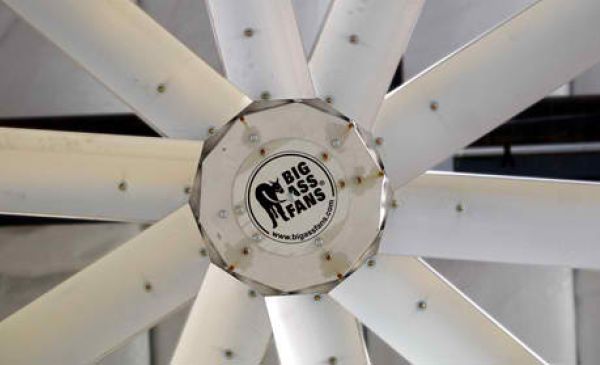
Big Ass Fans is a new national advertiser. They sell the world’s most efficient ceiling fans, in diameters from 5 to 24 feet. The company started life as the High Volume Low Speed Fan Company, before adopting an irreverent new moniker. (The company claims it changed names after repeatedly hearing customers say, “Man, that’s a big-ass fan.”)
Christian Dior went against the grain of romantic, flowery perfume names with its Poison brand.

A Louisiana pharmacist concocted a soothing diaper rash balm that worked so well, local athletes started using it. He called it Butt Paste. Now you can buy it at Wal-Mart.

Redneck Bank, based in Mustang, Oklahoma, is the online banking division of Bank of the Wichitas. (As the first line of their website says, “Yep, we’re a real bank.”)

When you pick an irreverent, outlandish name for your brand, is it a desperate way to call attention to yourself? A clever way to differentiate yourself? A tactic only for a fringe brand?

Or something else?

We went to our panel of experts for their points of view, and they cautioned that this approach is by no means for everyone.

JACK TROUT, renowned marketing strategist, best-selling author and founder of a consulting firm with partner offices in 25 countries: 

“We are indeed in an era of crazy names that people are using as a way to attract attention. The reason is that in category after category, more and more names are born as categories divide. (It’s the Immutable Law of Division.) Successful brands such as Google, Smucker’s and Roach Motel have encouraged others to get a little crazy as a way to be more memorable. But beware, your product has to have a good story behind it, not just an attention-getting name. (With Roach Motel, the roaches check in but they don’t check out.)”

Read More
Naming Steve Rivkin

Brand Naming: Rhyme To Train The Brain

By

Brand Naming Lean Cuisine

“Hickory, dickory, dock, the mouse ran up the clock.”
That might have been the first nursery rhyme you learned. There are powerful reasons why rhymes permeate early learning – and later in life, too, when the rhymes in popular songs are baked into our brains. Rhymes are pleasing, soothing, entertaining.

“Everyone likes rhymes,” says Dr. Steven Pinker, a Harvard professor, linguist and author of The Language Instinct and How the Mind Works. Chinese writings in the 10th century BC used rhymes. So did Aristophanes and other ancient Greeks. So do today’s gifted orators, trial lawyers and rap artists.

And so do savvy marketers, especially in the food sector, cooking up names such as Piggly Wiggly, Slim Jim and Reese’s Pieces.

What’s the reasoning behind rhymes? Here’s what the linguists and other social scientists have to say:

Rhymes create pleasant patterns. And our brains are wired to recognize and recall patterns.

Consider: Crunch ‘n Munch. Ronald McDonald. YooHoo.

Rhymes create a sense of symmetry and completion. Humans like anything that simplifies the buzzing confusion in the world, says Dr. Pinker.

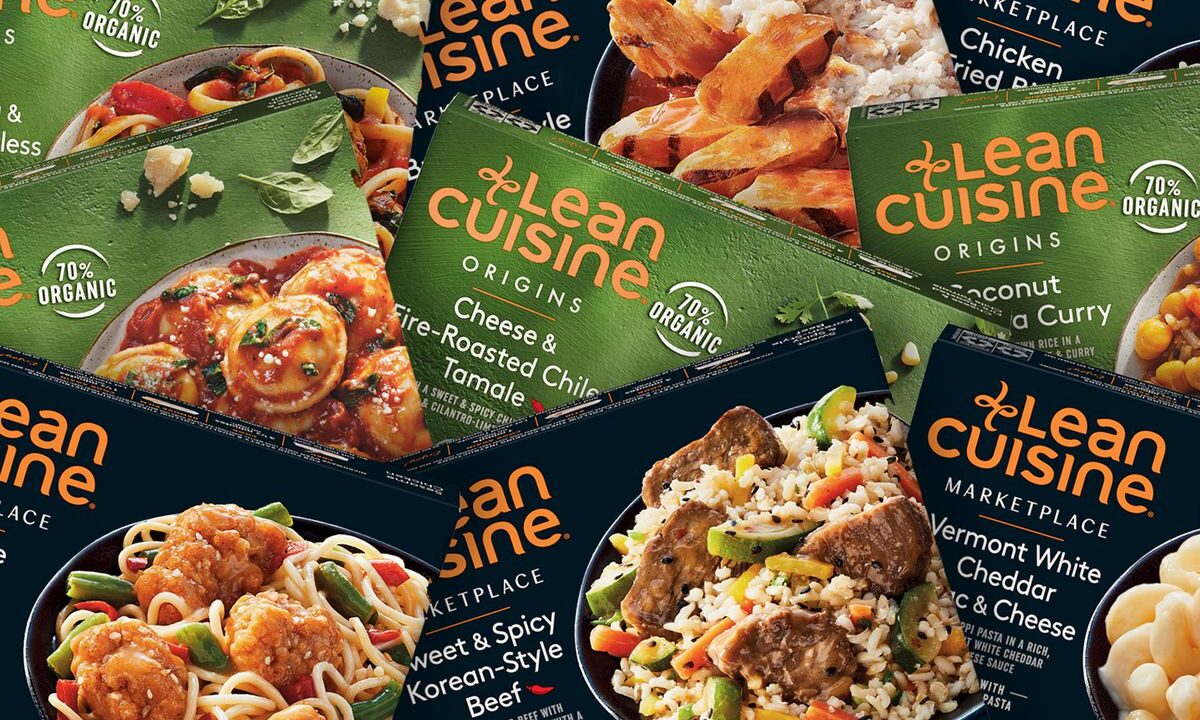
Consider: FireWire. Lean Cuisine. StubHub.

Rhymes are potent mnemonic devices, enhancing memorization.

Read More
Brand Legacy

Reviving A Legacy Brand

By

Brand Strategy Legacy Brand Fresca

Ovaltine is reintroduced with new advertising but the same old orange jar. Sales of the century-old, malt-extract, milk flavoring powder doubled in the first 100 days. Coca-Cola brings back the 40-year-old Fresca brand of citrus soft drinks with a graphics makeover and new flavor combinations.

Can everything old be new again?

As the publisher of BrandlandUSA, Garland Pollard is an expert on America’s legacy brands. A native of Virginia Beach, VA, he is active in historic building preservation efforts – and in a sense, his study of the value and tradition of “old brands” serves that same purpose for marketers and brand-builders.

We asked him about the lore of old brand names – and what they mean for today’s marketers.

Q: What are some notable brand names that are coming back to life?

Recently I’ve written about Hyatt bringing back its storied Hyatt House name, as a re-branding of its Hyatt Summerfield Suites extended stay properties. A Hyatt House was the place to stay in the 1970s – a smart, slick, modern hotel.

And it appears Nissan is driving the Datsun name out of the brand graveyard. Datsun will reappear in emerging markets such as Indonesia, India and Russia as an entry-level economy brand. It’s another example of how companies can re-use their brand names a few decades down the line.

Read More

Get Two FREE Chapters Of Brand Aid

Subscribe to Branding Strategy Insider Now and get regular updates and two FREE Chapters of Brad VanAuken's best selling book Brand Aid direct to your inbox.

  • Rare Overview of the Entire Brand Management Process
  • Analysis of the 40 Most Common Brand Problems
  • 17 Checklists Covering All areas of Brand Management
  • The Indispensable Guide for Building Strong Brands
Subscribe

Your information is Safe and will never be sold, traded or shared.