avatar_48x48
Contact BSI
Derrick Daye
888.706.5489 Email us

Author Archive

Branding Conferences

The Brand Strategy Event For A Changing World

By

Change is hard. That’s why the future can look so much like the past. And why brands and the marketers who manage them often lose their edge. For those marketers who see comfort zones as a dangerous place, we have designed a unique experience around brand strategy for you. One that challenges the thinking about brands and brand management. And one that breaks free from yesterday’s marketing conference format.

The Un-Conference: 360 Degrees of Brand Strategy for a Changing World, Featuring John Sculley of Apple and Pepsi Success

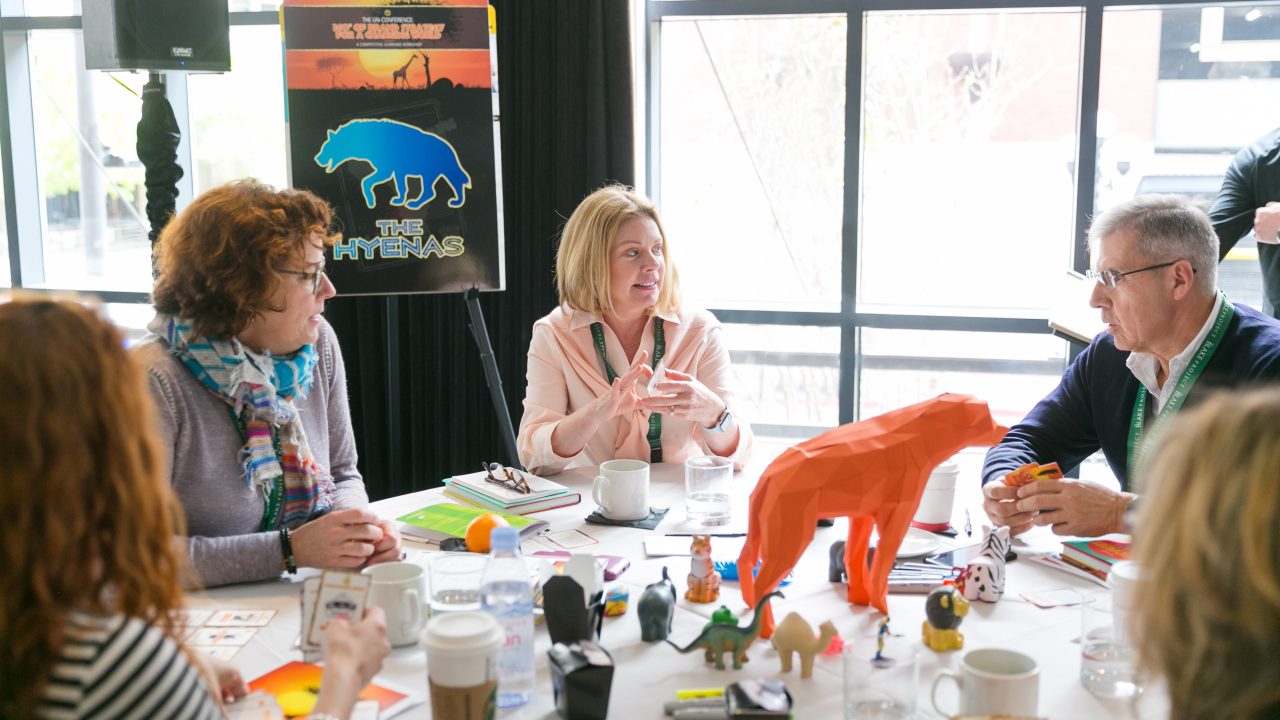
For two days next week, May 16 & 17 in San Diego, California we will focus on the most important concepts in brand strategy in a competitive-learning workshop where marketers compete and learn in teams. The walls are down — no podiums, no stages, the experts are embedded in the teams. Next, let’s look at the agenda, which does not include the BIG surprises we have planned.

Wednesday May 15th, 2013

Meet & Greet Mixer 7:00-9:00 pm at The Andaz Hotel Rooftop Pool, where you will meet your teammates

Read More
Building Emotional Connections

Rethinking Emotions In Marketing

By

Although the importance of emotions in consumer behavior is certainly not a new topic, there is still a feeling that marketers have minimized them in their market approach in the past. Of course, it is easier to change the packaging of your product or add a different ingredient than to make your brand ‘less sad’ or more ‘passionate’. However, recent neuro-research illustrates that we have been underestimating the impact of emotions on decision making for a long time. There are three different levels in our brain:

The first layer is called the ‘visceral brain’ or ‘automatic brain’. These are the type of brain cells we have in common with the most primitive animals. For simple animals like lizards, life is a continuing set of threats and opportunities and an animal has to learn how to react appropriately to all of them. The visceral level is fast. It compares information from the senses with pre-wired patterns of information. Based on this judgement, it swiftly gives instructions for routine deeds: running away, freezing, fighting or relaxing. This part of the brain is therefore responsible for instinctive behavior.

The second part is the limbic system. This brain adds emotions to the sensory information from the visceral brain. It is the base of the amygdale, a brain structure that is responsible for experiencing positive and negative emotions. Based on the emotional evaluation of a stimulus, the limbic system decides to continue or stop certain performances. We have this brain in common with other mammals. This limbic level is not conscious. It is responsible for so called automatic acts. Think of the way you drive your car or how a skilled piano player seems to do cerebral activities without much effort.

The limbic system interacts closely with the neocortex, the brain part that developed in the last stage of human evolution, called the ‘rational brain’ or the ‘reflective brain’. It reflects back on our acts and links sensory information to existing memory structures. Based on these reflections, it tries to alter behavior. This leads to informed decisions and is therefore often called ‘the ratio’.

The actions we undertake are the results of co-processing done by all three layers in our brain. However, research by Joseph LeDoux has shown that the impact of our limbic system is the biggest. Contrary to long-held beliefs, it is not our rational brain that is in the driver’s seat. Consumer behavior is largely controlled by emotions and only sporadically overruled by our ratio.

Implications for branding and marketing

Read More
Brand Management

A Memetic Approach To Branding

By

In recent brand research, the brand representations and associations in our memory, or ‘somatic markers’, have been linked to ‘memes’. Memes are the cultural equivalent of biological genes. Just like genes, they are replicators and jump from brain to brain. Everything we have learned from someone else, whether it’s a story, fashions, ideas, tunes, a brand or a product is a meme. Our own brand associations are constantly infected by the associations of other people and we infect the memes of others. Memes can propagate themselves and are passed on by replication or imitation.

To illustrate brand memetics let’s use Coca-Cola’s Vitaminwater as an example. Coke bought the brand in 2007, but in 2009 Vitaminwater’s sales volume slipped 22 per cent as a consequence of the recession. Price-conscious college students and Gen Y’s young professionals traded down to tap water or sodas. To respond to this market situation, Vitaminwater used the memes ‘nutrients’ and replenishing fluids or ‘hydration’ in their campaigns. The TV commercial ‘Epic Night’, featured a young male getting knocked on the head with a hammer, while a voice-over asks, ‘Have you ever woken up on the wrong side of the bed? Your brain’s throbbing and your face is in a pile of nachos?… Vitaminwater’s purple “Revive” has B vitamins and potassium that will help rehydrate after epic nights.’ The use of these memes will increase the differentiation and uniqueness of Vitaminwater compared to tap water or sodas. The new metallic bottle label with a nutrient matrix, an enlarged box highlighting the vitamins and minerals inside Vitaminwater, will also have a memetic effect. Competitor Gatorade (a brand of PepsiCo) is using completely different memes that are not asso­ciated with hangover relief. They focus on ‘athletic performance’.

In Charles Darwin’s description of evolution the process of ‘natural selection’ indicates that the fittest species will have the most progeny and become more prominent in future generations. The idea in memetic theories is that both genes and memes have a direct relation to brands and brand management. Memes that eventually dominate will be the ones that were reproduced the most, because they express traits that are ‘the fittest’ for the environment. Successful brands will ensure their existence through possessing winning memes. Brands that satisfy more customers will tend to increase their presence in a competitive market. Sometimes this requires product development and differentiation. To enhance further growth in China, Sprite’s biggest market in the world, the brand launched Spritea. The tea-flavored carbonated beverage is only sold in Asian markets where both Sprite and green tea are very popular drinks. Sprite is the leading carbonated soft drink brand in China, outselling even the Coke brand. The ready-to-drink tea consumption in China has increased by more than 30 per cent annually in recent years. To fit with this environment Sprite needed to adapt the green tea meme. To support the spreading of the meme, Spritea will be sampled across China, providing 15 million free drinks to domestic consumers. Jay Chou, a popular Taiwanese musician and actor stars in the new TV commercial for Spritea.

Read More
Branding Conferences

Marketers Versus Marketers

By

Today on Branding Strategy Insider, another question from the BSI Emailbag. Lisa, a global brand manager from New York, New York writes:

“I recently learned about your upcoming marketing conference on brand strategy. Please tell me why I should attend yours versus other marketing conferences scheduled for 2013.”

Thank you for your question Lisa and your interest in The Un-Conference: 360° of Brand Strategy for a Changing World. Let me lead up to my answer by first sharing the heart and soul of our brand strategy event for those who may be learning about it for the first time.

The Un-Conference is dedicated solely to the art and science of brand strategy and management.  For two full days, May 16 and 17, 2013 in San Diego, California, a small, exclusive group of brand marketers will gather together with legendary marketer John Sculley and the Senior Partners of The Blake Project to create a one-of-a-kind learning and networking experience dedicated to all aspects of building successful brands for the 21st century.

Intensive and illuminating, this workshop will equip participants with the insight, tools and techniques required to release the full potential of their brands in a new era where consumers drive and own the conversation about brands.

Why is this marketing conference unique? This is literally The Un-Conference.

  • There are no attendees – only participants. Each working in a team of ten, competing with and against other participants through fun and energizing learning-exercises centered on the most important concepts in brand strategy.
  • Exclusivity. Only 100 participants, 10 teams of 10, 10 tables, one room. Our focus is on deep learning and value for each participant – not how many people can be squeezed into a room. You will get to know those around you in this unique, game-based competitive-learning environment.
  • The walls are down. The experts and participants are working together in the teams for greater impact, removing the distance built into the typical conference format.
  • Real world impact. We will dive deep and help prepare you for the brand marketing challenges ahead.
  • Not your usual talking heads. John Sculley of Apple and Pepsi success will join the seasoned marketing experts of The Blake Project.
  • Jeans. We will all be wearing them. That matters as we have created a unique learning environment that addresses all learning styles – comfort is king.
  • Competitive-Learning. As in your marketplace – Some will win, Some will lose, All will learn. Embedded in the workshop experience is a unique game we designed with the elements of skill, chance, learning and fun. You will be assigned to a team prior to your arrival at The Andaz Hotel in the Gas Lamp Quarter of San Diego. There will be unexpected incentives for each team to win. The San Diego Padres and others will help bring fun, competitive energy to The Un-Conference. 

Who should participate?

We have reserved these two days for those marketers who want to change the world by creating more value for those that are most important to their brand’s future. The event will consist of approximately 100 brand marketing professionals, including:

  • Marketing oriented leaders
  • Marketing professionals (brand managers, product managers, directors, vice presidents, CMO’s, brand strategists etc.)
  • Advertising agency professionals (account executives and planners)
  • All marketers faced with brand strategy issues
  • All professionals charged with brand building and management
  • All marketers who are officially numb to last century’s format of marketing conferences

Lisa, you can register here while team spots are available. We’d be happy to have you.

The Un-Conference is Sponsored By: QualQuant Signals, Branding Strategy Insider and The Blake Project

Have a question related to branding? Just Ask The Blake Project

Read More
Brand Value & Pricing

Strong Brands And Corporate Growth

By

In what ways does developing a strong brand increase a company’s growth potential?

A strong brand helps a company grow in three specific ways. First, companies can charge a higher price — which hopefully leads to higher profits, thereby resulting in more cash to expand the business further. For instance, since Caterpillar has a very strong name in the construction equipment category, it can charge more—because buyers know of Caterpillar’s great product and service quality. In earning more, it can grow faster.

Secondly, a company with a strong name has an easier time getting into distribution channels. You can find Coca-Cola in supermarkets, vending machines, gas stations, restaurants, and many other venues. Imagine, however, whether a new drink with an unknown name would have much of a chance to be carried in most venues. A brand name’s strength determines how quickly and successfully a company can expand its business.

Third, once the brand gains trust and respect, companies can put that same brand name on—and then launch—more new items. This is why Campbell Soup Company doesn’t need to invent a new brand name for each new soup that it launches. The fact that the distinct, recognizable Campbell’s name is on the soup gives both the buyer and the distribution channels confidence in the product. Not needing to develop a new brand name saves the company a considerable amount of money. And because it is easier to launch new products under the same name, the company can achieve much faster market penetration.

Contributed to Branding Strategy Insider by: Philip and Milton Kotler, excerpted from their book, Market Your Way To Growth with permission from Wiley Publishing.

Sponsored byThe Brand Positioning Workshop

Join us at The Un-Conference: 360° of Brand Strategy for a Changing World
Featuring John Sculley May 16-17, 2013 in San Diego, California
A unique, competitive-learning workshop limited to 100 participants
As in the marketplace — some will win, some will lose, All will learn

Read More

Get Two FREE Chapters Of Brand Aid

Subscribe to Branding Strategy Insider Now and get regular updates and two FREE Chapters of Brad VanAuken's best selling book Brand Aid direct to your inbox.

  • Rare Overview of the Entire Brand Management Process
  • Analysis of the 40 Most Common Brand Problems
  • 17 Checklists Covering All areas of Brand Management
  • The Indispensable Guide for Building Strong Brands
Subscribe

Your information is Safe and will never be sold, traded or shared.