The Blake Project, the brand consultancy behind Branding Strategy Insider, delivers interactive brand education workshops and keynote speeches designed to align marketers on essential concepts in brand management and empower them to release the full potential of the brands they manage.
Archive for November, 2012
When conducting a brand audit, the simplest models often work the best – BCG’s Growth-Share matrix, a SWOT analysis, an organizational chart. These models work because they distill tons of information, identify what’s important and are easy to grasp.
Our favorite model for identifying brand strengths and weaknesses – the 3-Circle Model – is stunningly simple, too. It involves just three overlapping circles representing the brand, customers and competitors. Mapping the intersections of customer desires, brand capabilities and competitive strengths allows strategists to classify and prioritize different types of ‘value’.
Why it Works
The 3-Circle analysis is powerful in three ways:
1. Broader look at
potential differentiators
A typical brand analysis appropriately focuses most
attention on points of difference as potential sources of competitive
advantage. In addition to identifying points of difference, a 3-Circle Analysis
highlights potentially leverageable points of parity as well as unaddressed
customer needs. If these are important to customers and if no one else is
talking about them, or if your brand can talk about or deliver them uniquely, they
may be more relevant and potentially more differentiating than so-called
‘points of difference.’ Countless brands have achieved success by focusing on
category benefits (Raid Kills Bugs Dead, Lysol Kills 99.9% of germs, Foster
Farms chickens California-grown) or creating a point of difference that lies
outside of the product (Keebler Cookies are the only ones made by elves in a
hollow tree, a gecko assures Geico customers they will save money).
2. Keeps customer
needs in focus
The 3-Circle Model also provides a “final resting place” (pun
intended) for a brand’s areas of ‘non-value’ –features that may be
differentiating or important to keeping up with competitors but that are simply
unimportant to customers. The average supermarket now carries over 38,000
items, many of which are minor flavor or size variations. In the technology
category, the features arms race continues unabated. According to Harvard
professor, Youngme Moon, “There comes a point beyond which we are hard to
impress…beyond which additional improvement ceases to add value.” At that
point, it’s time to take a closer look at what customers truly value.
The New Year, 2013, approaches. And as everyone knows, the number 13 holds great symbolism. For the religious among us there were the 13 guests at the Last Supper and the 13 tribes of Israel. Scientists know the Universe is governed by 13 fundamental constants of physics, and the relationship between the volume of the Earth and the Sun is 1310. For shoppers there’s added value of 13 items comprising a “baker’s dozen.” Anthropologists study the 13 skies of the Aztecs.
But for marketers and brand managers who want to look beyond the horizon, we have identified 13 critical trends for 2013:
1. The Expectation Economy
Over the past decade, customer expectations have increased on average by 28%. But brands in all categories overall have kept up by only 8%, which anyone at the checkout counter can tell you is an awfully big gap between what brands offer and what customers desire. Accurate measures of real, often hidden, expectations provide significant advantages to brands that understand their value and point to how to delight customers.
2. Me-tail
The consumers’ heightened awareness of their actual control, added to the commoditization of brands and products, equals a significant segment of consumers craving customized and personalized products and services (see success of Pinterest). Customization will become an even more important brand differentiator, with returns-on-investments of loyalty and profitability made-to-order for your brand.
3. (E)tail Everywhere
Along with consumer expectations, online retailing increases daily. But increases in brand equity, and usage among online retailers, will come with consumers’ desires to be constantly connected to these brands. Brands will have to watch for online retail pop-up stores, like Amazon, and physical kiosks for brands like Groupon, and think in terms of broader access.
Read MoreBrand Strategy: Politics & Positioning
By Walker SmithNow that the dust has settled some after this year’s U.S. Presidential election, a critical imperative for brand marketers stands out. For all the hoopla of late about data, digital, diversity and nudges, none of these much-ballyhooed marketing innovations matter until old-timey fundamentals have been taken care of first.
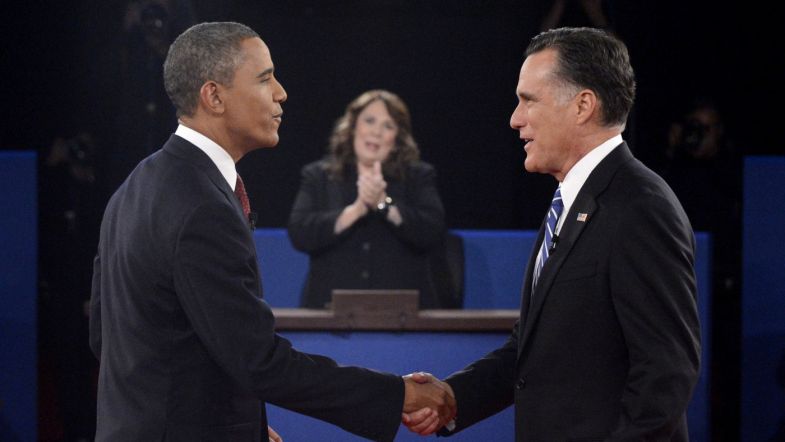
President Obama’s successful reelection campaign is a reminder that whatever you’re selling or how, it starts with the most basic thing of all – a great brand positioning.
The stories hot off the presses about Obama’s success have focused on the nifty new stuff. The data and digital angle has emphasized the campaign’s high-tech use of Big Data and the predictive models developed to classify and prioritize voters for fund raising, ad targeting and get-out-the-vote efforts. The diversity angle has focused on Obama’s disproportionate margins among the nation’s fastest growing demographic groups, particularly Hispanics (and the challenges this presents going forward for the Republican party). The nudges angle has highlighted the campaign’s utilization of insights from behavioral economists and social psychologists about the best ways to persuade and motivate people. But these stories, while true, overlook the most important element of Obama’s campaign.
In a New York Times op-ed the day after the election, Obama’s lead pollster, Joel Benenson, took exception to these narrowly focused accounts of the campaign’s success. As he put it, “the president’s victory was a triumph of vision, not of demographics.” Or to put it in brand marketing terms, a great brand positioning.
Read MoreTucked away inside a Wall Street Journal article about creating titles for movies was a wonderful tidbit about research and name testing.
Pollster George Gallup pioneered "title testing" in the 1940s at the Audience Research Institute, which he created to help studios maximize profits of their movies.
Mr. Gallup urged studios to keep titles brief and to the point. Surveys would ask people to look at groups of titles and try to describe what a film would be about based on them.
The British film The Rake's Progress, about a serial seducer, was instead released in the U.S. in 1946 under the name Notorious Gentleman.
Why? Polling revealed that American audiences expected the film to be about the evolution of gardening tools.
From this two teachable moments surface about new names:
•Don’t assume your audience knows what you know.
•If you’re considering a term that’s obscure or unusual or archaic – look before you leap.
Contributed to Branding Strategy Insider by: Steve Rivkin
Sponsored By: Brand Aid
FREE Publications And Resources For Marketers
Read MoreTrust is the most critical component in building and maintaining a strong, emotionally driven and enduring brand. However, in a world of promotion-driven-marketing tactics, many brand owners forget that building trust is the only thing holding the relationship with the customer together.
Most marketers are in business to create demand and sell more stuff. They are rewarded on their skill and ability to help organizations sell. For most customers, selling is not a very trustworthy practice. Nobody likes to be sold, but people sure do love to buy. More than ever customers buy from brands they trust. At the beginning of any relationship, trust is the most difficult component to establish.
There are two kinds of people–those who begin a relationship with little trust which needs to be earned over time, and those who begin with trust freely given, but is forever taken away on the first sign of behavior deemed untrustworthy. Either way trust must be established or there will be no relationship.
Relationships with trusted brands are built and maintained in this same fashion.
People naturally will measure, with great care and consideration, how the brand is likely to behave in a given situation depending on the rewards for being trustworthy and the deterrents against untrustworthy behavior. When trust is established at its highest level between a brand and the customer, there is always an emotional “investment” made between the two parties.
This bond is based wholly on strong emotional connections as a result of the perceived shared values between the brand and the customer. It is never based on functional benefits or feature based ingredients. Trusted brands understand what customers really care about so completely that they become a badge of identification for the relationship.
The components of trust in building enduring brand value.
Read More