avatar_48x48
Contact BSI
Derrick Daye
888.706.5489 Email us

Archive for August, 2012

Brad VanAuken Customer Insight

Brand Building On Deep Desires

By

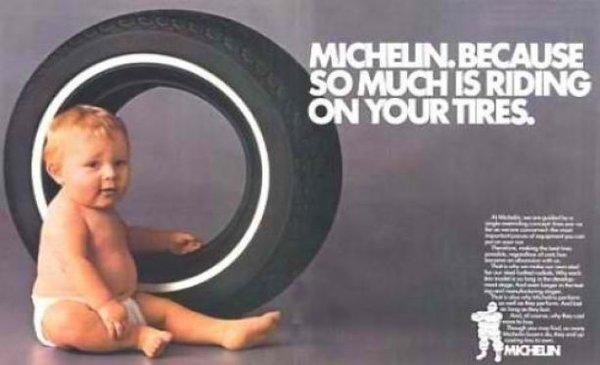
Brand Strategy Michelin
Brands that
tap into people’s deepest desires make strong lasting connections with those people. Deep desires most often come from a feeling of lack but can also result from seeking a place of safety, peace or comfort. The following are deep desires into which brands can tap: 

  • To be smart
  • To be accomplished
  • To have high status
  • To be safe
  • To be attractive
  • To be sexy
  • To be admired
  • To be liked
  • To be unique or different
  • To make a difference in the world
  • To belong
  • To be in control
  • To be sovereign, free or independent
  • To be noticed
  • To have a purpose
  • To have power over others

Any brand that can make people feel as though they have a little bit more of one or more of these if they interact with the brand will connect with those people on a deeply emotional level.

Can you think of examples associated with each of these? Here are some hints. Some beer brands tap into the need to belong. Many clothing brands tap into the need to be sexy or attractive. One automobile brand in particular taps in to the need to be in control. Many brands across many categories tap into the need for status. Automobile and watch brands come to mind immediately. We just helped a golf brand link to the need to be accomplished. A legendary tobacco brand focused on the need for independence. One well-known soft drink brand taps into the need to be unique or different.

What examples can you think of?

Sponsored ByThe Emotional Connection Workshop

FREE Publications And Resources For Marketers

Read More
Brand Storytelling Derrick Daye

Winning The Brand Story Wars

By

Brand Storytelling BMW Audi

Today’s best marketers are creating cause and brand loyalty by telling stories that deliver a pattern of meaning for a society in need of just that. They build communities of purpose and give people an empowering sense of us. All societies have relied on core myths to guide them, and too many of ours have been stretched to the point of breaking. Our hunger for these stories explains many of the greatest marketing successes of our time and points to the enormous responsibility marketers carry as creators of modern myths. Why? Because the wars fought over stories have always been the most critical fights in shaping a society’s future. 

The drama played out between Glenn Beck and Annie Leonard is part of the ancient pattern of powerful worldviews colliding. In fact, as far back as we can see, all wars have been story wars. Take your pick: the conquest of the Philistines by the Hebrews; the Crusades; the German invasion of Poland; 9/11. Countless wars have been fought over stories—stories of a people holding a unique covenant with God; a city standing on a holy rock; a master race with a destiny to rule the world for a thousand years; the heavenly delights in store for martyrs. Powerful stories have spurred millions of men and women to acts—tragic and heroic acts—that have cost them their lives and fundamentally reshaped our world. The stories of the winners carry on and continue to define our reality. 

Now, I’m going to make the (I hope) safe assumption that you’re not trying to sell a war. More likely you’re trying to sell an idea, a set of values, or a product. In other words, you’re a marketer, not a military recruiter. So why all this talk of war?

Read More
Brad VanAuken Brand Strategy Gaining Market Share

Beyond Stealing Share

By

Stealing Share Brand Strategy

The conventional wisdom is that marketing expenditures help brands steal share from their competitors. This assumes a fixed pie in which one competitor’s gain is another competitor’s loss. This also implies that products and brands are at least somewhat interchangeable in customers’ minds.

There is a much more productive way to approach business growth. Expand the pie by better understanding and meeting customer needs, not just once but continuously. Through greater customer intimacy and insight, you will find ways to better meet your customers’ needs, meet more of their needs and even anticipate their future needs. In this way, you will become more valuable to them and they will become more dependent on and emotionally connected and loyal to your brand.

Another approach beyond stealing share is to bake a new pie that only your brand owns. That is, redefine what you offer in a way that make’s your brand a “category of one,” that is, the only brand that can fulfill the new category’s need. Branding Strategy Insider has more on “category of one” brands here.

And finally, consider the wisdom offered by Adam Brandenburger and Barry Nalebuff in their book, Co-opetition: A Revolution Mindset That Combines Competition and Cooperation: The Game Theory Strategy That's Changing the Game of Business, which is to reframe other businesses and brands operating in your brand’s categories not primarily as competitors from whom you need to steal share, but rather as partners with whom you can expand the pie.

Brand marketers should know and consider that stealing share is a much tougher and less rewarding business strategy than increasing your revenues through new product and service development, innovation, reframing the category and forming strategic partnerships.

Sponsored ByThe Brand Positioning Workshop

FREE Publications And Resources For Marketers

Read More
Brand Positioning Branding and China Derrick Daye

Brand Positioning For Chinese Markets

By

Brand Positioning China Li Na Nike

Brand positioning, the image of the brand within the consumer's mind, is no longer a fixed, static concept. Instead, it is becoming increasingly dynamic and often varies across countries and cultures and according to specific consumer experiences.

Many brands enjoy a quite different image across cultures, even when the branded product and other marketing-mix elements are largely similar. China and the Chinese consumer provide a good example of this phenomenon, where many "medium quality" Western brands are perceived as "premium", "glamorous" or even "exclusive" and "luxury".

Examples that spring to mind are Starbucks, Apple, Holiday Inn and BMW, which are all associated with "prestige" and "elitism" by the new, affluent urban Chinese consumer, while across Europe and the US they are considered high-quality but, functional brands.

One obvious reason for this rush to purchase and visibly consume such "exclusive" brands lies behind the rapid economic and social development of certain parts of China. Chinese consumers in these areas, largely the first-tier cities and southeastern coastal provinces, suddenly find themselves for the first time in a position to enjoy such expensive luxuries. In consequence, Chinese consumers with lower purchasing power are also attracted to the relatively new, glamorous brands, such as clothes and cars, in order to combat any feelings of inferiority.

But why is the Chinese consumer's perception of Western brands so often associated with prestige and exclusivity when the very same branded product or service in the West is merely a value-for-money means to an end? To understand this further, it is necessary to move away from the traditional view of brand positioning, in which consumer brand perception starts with the branded product itself and remains fixed regardless of the experiences during which the brand is consumed.

Read More
Brand Strategy Derrick Daye

Brand Strategy: Be First By Being Second

By

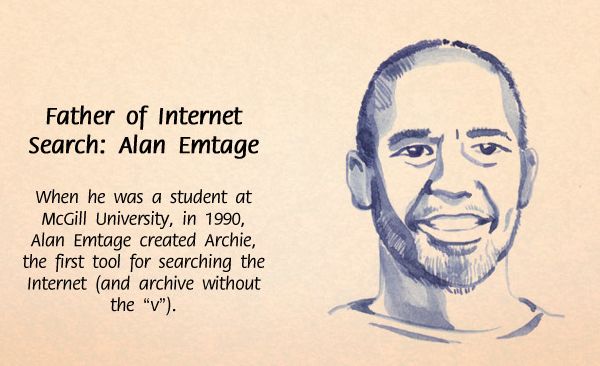
Brand Strategy Search Engine Alan Emtage

Is there really much advantage in being a first-mover? There is a lot of research in academic circles about order-of-entry, and brand marketers are always monitoring the competitive landscape for breakthroughs that could help or hurt their chances to be first. But is being first worth the time and attention, particularly when it comes to all of the technological wizardry whizzing around these days?

Technology evolves at the bleeding edge, but technology followers not leaders are often those who realize the marketplace advantage from technological advances. Google was not the first search engine. Facebook was not the first social network. Windows was not the first operating system. The iPad was not the first tablet computer; it wasn’t even Apple’s first tablet computer. And while Apple has led the way in smartphone technology, Google Android and Samsung Galaxy have eclipsed its market position.

The evolution of technology is a leapfrog process in which first-movers frequently get left behind by fast-followers. This is what made Steve Jobs so brilliant. He could leapfrog like no one since Thomas Edison. His ability to bring an innovative perspective to cutting-edge technologies and turn them into compelling offerings is legendary.

Part of the reason for the success of second-movers is that technology leaders tend to focus on the technology while technology followers focus more on the business model. Followers get the advantage of seeing the marketplace before launching; leaders have to launch sight unseen.

For most brand marketers, the issue at hand is a mix of bringing their own new technologies to market and putting new technologies from other categories to use in their own, but either way they face the challenge of whether or not to be first. While this is an especially difficult challenge in today’s digital marketplace, it is not a new challenge for brand marketers.

Read More

Get Two FREE Chapters Of Brand Aid

Subscribe to Branding Strategy Insider Now and get regular updates and two FREE Chapters of Brad VanAuken's best selling book Brand Aid direct to your inbox.

  • Rare Overview of the Entire Brand Management Process
  • Analysis of the 40 Most Common Brand Problems
  • 17 Checklists Covering All areas of Brand Management
  • The Indispensable Guide for Building Strong Brands
Subscribe

Your information is Safe and will never be sold, traded or shared.