avatar_48x48
Contact BSI
Derrick Daye
888.706.5489 Email us

Archive for May, 2012

Brad VanAuken Branding: Just Ask...

The One Brand Strategy

By

Brand Strategy P&G, Unilever, Mars, Kelloggs, J&J, Pepsico, Coca-Cola, General Mills, Kraft, Nestle

Today on Branding Strategy Insider, another question from the BSI Emailbag. Laura, a Director of Coprporate Marketing in St. Louis, Missouri writes:

"My company is about $100 million in annual revenue. We offer several b2b services and in each area, we have a different “branded” web portal where clients go to view reports and in some cases manage workflow. Can a company of our size (with little dollars devoted to branding) successfully promote multiple “brands”?  Should all of our branding center around the main brand?" 

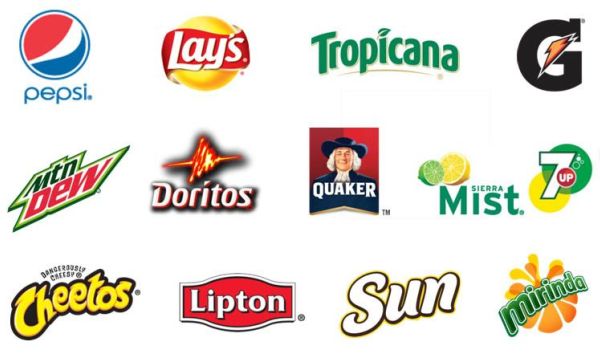
Laura, you are right to point out that a smaller company with limited resources for branding cannot support multiple brands well. Look at Nestle, P&G, Kraft and the other 'house of brands' companies pictured, they have had tremendous success with a multiple brand strategy, though it is only successful when there is a high level of investment to maintain it. It would be better for you to focus on one brand. I would choose a brand that had some meaning across all of your product categories and uses. I would also craft a tagline that alludes to the benefits offered by your brand. Regarding your brand’s Internet presence, I would focus on one website, with separate navigation (and pages, if necessary) for different customer groups with different needs. Your marketing dollars will go further if you are only supporting one brand. And, brand awareness, a key driver of customer brand insistence, should increase.

Thanks for your question Laura. Do you have a question related to branding? Just Ask…

Sponsored ByThe Brand Positioning Workshop

FREE Publications And Resources For Marketers

Read More
Branding Basics

Behavior Is The New “B” Word In Marketing

By

Brand Strategy Consumer Purchase Behavior

The words “brand” and “branding” have become so ubiquitous in our jargon that they are becoming meaningless. Within your organization I’ll bet it’s a fair statement to say you’ve heard these words thrown around recklessly from time to time. You probably wondered privately “does branding really matter?”

At the risk of overly simplifying, let’s use the word “identity” in place of branding for this discussion. I think it’s a far better word with more relevant meaning. Organizations, products and services all have an identity. It’s through your identity that you build a relationship in the minds of customers by defining who and what your value proposition represents. But this is only half the equation – the more purposeful component to identity building is the ability to influence customer behavior to purchase. Endless logos and ad making will not get you there.

Nobody wants more branding

The inherent value your product or service brings to the marketplace is the sum total what it represents in the minds and physical experiences of customers. All the perceptions and real interactions people have with what you bring the marketplace forms your identity (a.k.a.brand). Customers decide what this means to them, not you. Customers determine the hierarchy of competing identities in a category. To influence purchase behavior your identity must matter to people. The trouble nowadays is customers aren’t paying much attention, and worse, they don’t believe or remember branding messages anyway. As a result, even the most memorable branding falls short of influencing customer behaviors. Couple that with the changing forces of our digital age, search technology, and how we are all instantly connected, and you can understand why traditional expectations of image and awareness in marketing are falling short in the eyes of the metrics obsessed. You can’t expect to influence behavior when customers are busy avoiding your branding at every turn. Nobody out there wants more branding.

Read More
Brand Identity Value Creation

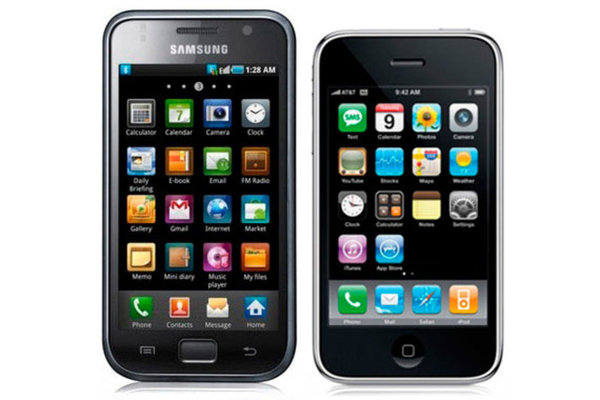
The Temptation To Copy What Works

By

Brand Strategy Apple Samsung

Developing a new or refreshed corporate or brand identity is often a response to change. Many factors will drive that change – new management, mergers, acquisitions, product development, or a competitor’s threat to a core business. Most change within organizations (or individuals for that matter) is usually driven by external influences (fear) and rarely is initiated through forethought (innovation).

Seemingly in every industry category, offerings are increasingly becoming commodities and perceived by customers as less differentiated and less valuable. Naturally it’s tempting to respond to this by changing something. It’s only logical to assume that maybe you can duplicate success by copying the attributes, features or capabilities of what is working for others. The sobering truth is this tactic will not sustain real growth, nor add more value to customers; it only increases the sameness and adds to the clutter.

We adapt by copying others.

Social observer and author, Mark Earls demonstrates the simple fact that humans have largely evolved by copying others. For thousands of years, humans have adapted through a “do what works” mentality. In fact, Earls points out “copying is our species’ number one learning and adaptive strategy.” The temptation to copy other’s success is, well — tempting. Here’s why:

It’s easier and less risky to copy what works than to create more value.

Humans have naturally sought the safety and security of the known, and avoided the risk of the unknown. When it comes to building an identity, product development, and marketing, the majority of change today is really just copied from what came before, or from what’s currently influencing the behaviors of the status quo. The pressure to sell more stuff seems to trump creating more value through serving people better.

As a result, products have more features on features, there are more flashy logos, more marketing.  Seemingly, the more that changes, or gets copied, the more organizations and brands become the same – the result is more commodization with eroded brand equity.

Read More
Brand Management

An Open Letter To Marketers

By

Brand Strategy Brand Marketing Madison Avenue

Dear Marketers:

I’m much smarter than your marketing gives me credit for. I don’t like to be sold…I don’t care about your advertising, your free samples, your promotions, your special offers. I don’t like to be told what’s cool, new, improved, last-longer, smells better, tastes better, or is less filling…I don’t care about your brand, it doesn’t matter to me. I avoid your interruptions to my busy day whenever and wherever I can…I don’t have time to pay attention to your sales pitch…You are white noise to me and I have tuned you out. If you want to be a part of my life, here’s what you’ll need to do:

Be honest with me

Keep your promises

Treat me with respect

Provide me with more use value than you take from me in cash value

Teach me better ways to grow and expand my life experience

Help make my day-to-day easier, lighter, more relaxed and enjoyable

Help me to experience greater connection to what’s important to me

Do these things for me and you will win my trust and devotion. Then I will gladly welcome you into my life, and share the value of our relationship with others who are important to me.

Sincerely,

A. Consumer

Sponsored ByThe Two-Day Brand Positioning Workshop

FREE Publications And Resources For Marketers

Read More
Branding and Social Media Marketing

Marketers Must Change Their Focus To Connections

By

Brand Strategy Brand Marketing

The arc of the Internet is misunderstood. From its early description as the Information Superhighway to its current utility for seemingly limitless search, most pundits have characterized – even lauded – the Internet as a transformative portal to information and data. This is true as far as it goes. But this is far from the true essence of the Internet.

The Internet is about connections, not information, and this has been the case from the start. Certainly, people use the Internet for news, information and entertainment, but even more they have flocked to the Internet to strengthen and forge connections with others. The content – news, information and entertainment – is not merely content; it is something people share that binds them together in tighter, more meaningful bonds. It’s the creation of these bonds that marketers need to better understand. To get there, let’s look back.

The precursor to the Internet was the now-famous ARPANET that was begun not as urban legend has it to geographically distribute data and control systems to survive a nuclear attack, but rather to link up widely distributed networks and computers so that they could be uniformly, and thus more easily, accessed. Hence, the neologism Internet, short for “internetwork.”

Better access to information was central to the thinking behind the early Internet, but more telling about what is central to the Internet are the ARPANET recollections of Robert W. Taylor, the so-called father of the Internet. It is worth quoting at length from an interview he did with reporter John Markoff for The New York Times in 1999. When asked what he ‘discovered’ using early versions of ARPANET, Taylor replied:

Read More

Get Two FREE Chapters Of Brand Aid

Subscribe to Branding Strategy Insider Now and get regular updates and two FREE Chapters of Brad VanAuken's best selling book Brand Aid direct to your inbox.

  • Rare Overview of the Entire Brand Management Process
  • Analysis of the 40 Most Common Brand Problems
  • 17 Checklists Covering All areas of Brand Management
  • The Indispensable Guide for Building Strong Brands
Subscribe

Your information is Safe and will never be sold, traded or shared.