
avatar_48x48
Contact BSI
Derrick Daye
888.706.5489 Email us

Archive for April, 2012

Brand Values Alignment

The Power Of Brands Lies In Shared Values

By

Brand Strategy Shared Values iPhone Apple Brands, just like people, have values – bedrock principals they stand for and hold near and dear to the heart. These principals form the reason brands exist. Brand values influence two important business assets – relationships and reputation. Relationships are built on trust and reputation is built on delivering on your promise.  

In our over-crowded, me-too marketplace, points of difference that are function and feature based are no longer sustainable. Consumers today are tuning out marketing and tuning in to those brands that represent shared values. Forward thinking marketers recognize their brand building initiatives must focus on relationships and reputation.

Nothing else really matters.

Connections begin with respect and empathy Brands aren’t human, they have no consciousness, brands are not things, nor do they do anything. Brands are nothing more than a shared idea of value– mirrors of our interactions and transactions with each other. Of course, it’s fashionable and fun to talk about brand in the parlance of our industry, brand managers and brand consultants love jargon and thinking models that they can write on a white board.

At the end of the day, we’re still talking about an idea of value in the mind. And one idea human beings value is connection to other humans and being part of the tribe. When people share values they’re more likely to hang with their like-minded mates. And so it is with brands. The power of brands lies in shared connections based in shared values.

Shared values form the basis for all relationships Wherever we go in business and in life, we bring are own values along as well. When others share our values, this becomes a powerful and attractive force to bind us closer together. Shared values form the very basis for every relationship.

Enlightened brand owners realize in our time-compressed days, most of us have little time for things (and people) that don’t really matter to us. For brands to matter, the customer must believe the brand is bringing something more valuable to them than the cash exchanged. In effect brands have to provide more “use value” than they ask in cash value.

It is the shared experience of value that binds customers to the brand and the organization behind it. When brands deliver at this level, they lead markets and shift the culture. The result is massive financial gain for the brand owner.

Building a values-based brand No longer can brands be differentiated on features, benefits or price. There’s just too much stuff out there these days. Customers have so much choice everything is white noise.

Leading brands are always differentiated by their shared values. If the values your brand represents are not aligned to the values of your customer, no amount of marketing will change their mind. And never try amending brand values to line up with the customers.

That’s a recipe for disaster.

Trust is the foundation of a value-based brand. As in all relationships, trust is what holds things together and defines the quality of brand reputation. You’re the real deal or not–it’s just that simple. Here’s a list of things brand owners of values-based brands always do to build trusted relationships with customers:

-       value their purpose more than their profits

-       eliminate a sales first culture

-       focus on the things money can’t buy

-       live their convictions rather than conform to markets

-       listen more and market less

-       elevate the quality of life for the tribe

It’s as simple – and as difficult – as doing the right thing Values-based brands are always “doing the right thing.” It’s a simple principle, but one that foils many brand owners because many don’t take the time to know what the right thing is. It’s inevitable that every brand will face some form of change, controversy, and crisis. And it’s in these challenging times, that a brand’s actions broadcast its values. In a marketplace hyper-focused on the next best thing, values-based brands are disciplined focused, consistent, and credible.

The objective of values-based brand management is to do the right thing without agonizing over the specific issues. When brand owners know what values for which their brands stand, one can see choices more clearly, make decisions more easily, and serve the tribe with more humility.

Sponsored ByThe Two-Day Brand Positioning Workshop

Read More
Brands & Consumers

Consumer Behavior: Spenders By Nature

By

Brand Strategy Consumer Spending Brand Marketing

Consumers want to believe again. So help them.

People are tired of doing without. The term being bandied about right now by market observers is “frugality fatigue,” meaning the pent-up desire among hard-pressed, anxious consumers to pick up their buying. Obviously, some consumers remain too distressed for their spending to rebound. But most people feel hopeful about renewing their engagement with shopping.

Lots of signs point in this direction. Discretionary purchasing is up. Name brands and non-discounted fashions are doing better. High-end personal care products are growing. People are planning to dine out more, and when they do they are going to higher-priced restaurants, ordering appetizers again and spending more than they budgeted. More people are planning to spend their tax refunds instead of using them to pay off debts.

As we’ve counseled all along, there is no “new normal of frugality” setting in as the recession recedes.  Instead, as the economy is showing signs of strength, so is consumer spending.

This is to be expected. Americans are spenders not savers. It’s a myth that we’re thrifty; we’re not. We spend, and have always spent. We are unique in this way. This is not true in other developed markets. Brits and Europeans are savers not spenders. Sheldon Garon’s recent economic history, Beyond Our Means, shows that this difference is rooted in distinctive 19th century social contexts of moral suasion and political and charitable institutions.

People can’t spend if they don’t have cash or credit, which is where many consumers still find themselves nowadays. But in America, once people feel flush again, they spend. As Garon makes clear, this is cultural.

Read More
Naming Steve Rivkin

4 Do’s And 1 Don’t For Smarter Brand Naming

By

Brand Naming Brand Strategy Earthgrains

1. Do go for quantity. Nine of any ten names generated (by any method or means) fail to get through an availability screening. And this is not a new problem. When the Coca-Cola Company introduced its first diet drink way back in 1963, an IBM Model 1401 computer was programmed to disgorge every four-letter combination containing a vowel. Out came 250,000 combinations. Then 600 names were examined as possibilities. But only 24, a mere four percent, had no conflict with existing trademarks. One of them, Tabb, was shortened to Tab.

2. Do look within. Sometimes good naming is more common sense than courage. Anheuser-Busch decided to spin off as an independent company the large commercial baking company (Campbell Taggart Inc.) it had acquired. Seeking a more expressive name, management selected one of their regional bread brands, redesigned it, and elevated it to the corporate name: Earthgrains Company.

3. Do remember that less is usually more. Bib-Label Lithiated Lemon-Lime Soda was a curious and cumbersome name. Seven-Up was better. Dr. Richardson's Croup and Pneumonia CureSalve was going nowhere until it became Vicks VapoRub.

4. Do embrace emotion. Reason alone does not a great name make. Sears could have named its car battery "Reliable." (Practical, logical and very ho-hum). Now consider the actual choice, the evocative and emotionally-charged DieHard. Supreme Court Justice Felix Frankfurter acknowledged this right-brain aspect of brand naming when he wrote, "The protection of trademarks is the law's recognition of the psychological function of symbols. If it is true that we live by symbols, it is no less true that we purchase goods by them."

5. Don't be overly obvious. Sterling is a lovely word, especially in the United Kingdom where it defines the basic British monetary unit and has come to mean "of the highest quality." But it is so obvious a choice that more than 700 U.K. companies have the word "Sterling" in their name.

Contributed to Branding Strategy Insider by: Steve Rivkin

Sponsored ByBrand Aid

Read More
Brand Positioning Derrick Daye

Customer Based Brand Positioning

By

Brand Strategy Brand Positioning Starbucks

The competition-based perspective of brand positioning emphasizes distinguishing a brand from competing brands on benefits important to customers. By contrast, the customer-based perspective focuses on how consumption of the brand and the category is relevant to customers' lives. Adopting a customer-based approach requires uncovering the abstract meanings associated with consumption of a particular brand or the general category. We refer to these as brand essence and category essence, respectively.
Contributed to Branding Strategy Insider By: John Wiley & Sons, excerpted from Kellogg on Marketing, 2nd Edition by Alice M. Tybout (editor), Bobby J. Calder (editor), Phillip Kotler (foreword by) (c) 2010 by The Kellogg School of Marketing.  

Sponsored ByThe Brand Positioning Workshop

Read More
Brad VanAuken Branding: Just Ask...

Aligning Brand Personality And Brand Values

By

Brand Personality Brand Strategy Southwest Airlines

Today on Branding Strategy Insider, another question from the BSI Emailbag. Fauziah, a senior brand marketer in Kuala Lumpur, Malysia asks: 

“We are in the process of developing the corporate brand and parallel to that is the development of the employer brand. A list of the brand personality and the brand values have been developed separately for the corporate brand and the employer brand. My question: Is it appropriate for the brand personality (corporate and employer brand) to be the same and/or similar to the brand values.”

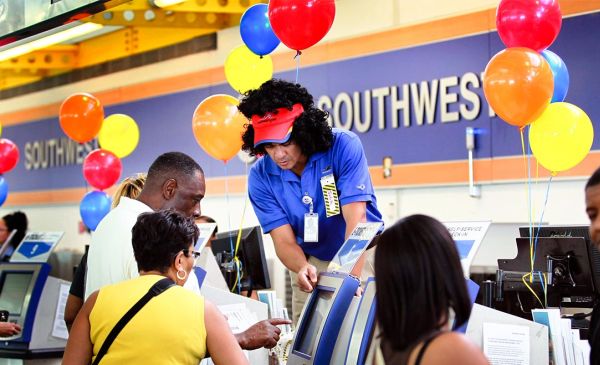
Thank you for asking this question, Fauziah. Yes, there should be a correspondence between the core values of the organization (or the corporate culture) and the personality of the corporate brand. That is, the core values of the organization should reinforce (or at least not be in conflict with) the intended brand personality. For instance, it is very difficult for a brand to be perceived as compassionate if the corporate culture is ruthless. And if "responsiveness" is an intended brand personality attribute, it would be advantageous for "responsiveness" to be a core value of the organization. And how can a brand be perceived to be innovative unless it is the result of an innovative organization? It would be much more difficult for Southwest Airlines to be a fun airline to fly if it didn't hire employees who are fun and who are encouraged to have fun in what they do. So yes, by all means make sure your employer brand aligns with your corporate brand on values and personality attributes.

Have a question related to branding? Just Ask…

Sponsored ByThe Brand Positioning Workshop

Read More

Get Two FREE Chapters Of Brand Aid

Subscribe to Branding Strategy Insider Now and get regular updates and two FREE Chapters of Brad VanAuken's best selling book Brand Aid direct to your inbox.

  • Rare Overview of the Entire Brand Management Process
  • Analysis of the 40 Most Common Brand Problems
  • 17 Checklists Covering All areas of Brand Management
  • The Indispensable Guide for Building Strong Brands
Subscribe

Your information is Safe and will never be sold, traded or shared.