The Blake Project, the brand consultancy behind Branding Strategy Insider, delivers interactive brand education workshops and keynote speeches designed to align marketers on essential concepts in brand management and empower them to release the full potential of the brands they manage.
Archive for October, 2010
Brand Building Via Mobile Devices
By Martin Lindstrom
Let me ask you a difficult question: How on earth would you build your brand on a canvas smaller than a matchbox? What if you could use only one color (say black on a green background), you had no scope for graphics, and the consumer was paying for every second it took for you to send him or her a commercial message?
Welcome to the new world of m-branding. Now, more than ever, creativity and discipline are needed for preparing a branding platform. Why? Because everything is telling us that the WAP-enabled (Wireless Application Protocol) cell phone will soon be bigger than the World Wide Web we know today.
"Soon" is three years from now, according to AC Nielsen. Do you believe this? I do. Just think back to 1995 when the World Wide Web was born, and then think about the criticism the Net weathered at that time. Yet look at the Net's onward growth today.
Knowing how fast this next branding revolution could arrive, you'd better be ready and start preparing for wireless branding. Excuse me for comparing this with a cigarette brand, but I can't stop thinking about Silk Cut, an English cigarette brand which, in the '80s, prepared for a government ban on cigarette commercials for all media.
Read MoreExploring Technology And Pharmaceutical Naming
By Steve RivkinIn the naming playground, technology and pharmaceutical firms are among the busiest performers. So we asked Mark Steiner, a nationally recognized intellectual property attorney, for his take on the good, the bad and the ugly in those fields. Steiner heads the trademark & copyright practice group at Townsend and Townsend and Crew in San Francisco.
Q: Mark, what’s your general advice to people who want to name companies and products in technology and pharmaceuticals?
When it comes to trade name and trademark selection, it is important that the company make every effort to pick a name and mark which are appealing from a marketing standpoint and protectable from a legal perspective.
As to the latter, we are looking for a mark which is distinctive. This means that the company should be creative and avoid the temptingly easy route of coming up with a mark which is descriptive of the products. The best marks are those which have no meaning whatsoever within the context of the industry: A fanciful, coined term which is a made-up word (think "Exxon" or "Kodak") or an English word which has no relevant meaning, such as "Apple" for computers.
Such marks are most likely to be available when we conduct proper trademark searches and will afford the company broad and strong trademark rights. The mark will most likely be relatively easy to register in the United States and abroad and, if there are no other marks which are similar in appearance, sound and meaning in the industry, the company will be able to enforce its trademark rights against others who would dare come close.
Q: What are some examples of successful names in technology and pharma land?
XIENCE, SurgRx and FlowMedica for medical and surgical devices are strong names and marks. They are distinctive, registrable and enforceable against third parties.
Read More10 Warning Signs Your Brand Is Failing
By Derrick DayeYou know your brand is failing in the marketplace when…
1. Your brand is mentioned to customers and potential customers, and there is strong negativity in their response.
2. Your brand’s external messages do not “ring true” with all employees.
3. Employees are not enthusiastic or consistent in recounting what makes their brand special.
4. The brand’s market share is decreasing.
5. Competitors never mention your brand as a point of reference.
6. The press does not write about your brand.
7. Your CEO does not have a strong vision for the organization and its brand. He or she talks more about financial targets than the vision.
8. Your organization’s leaders never seem to “talk the brand” and “walk the brand talk.”
9. Your organization fails to attract and retain high quality employees.
10. Your brand fails to build customer loyalty.
Sponsored by: The Brand Positioning Workshop
Read MoreBrands And The Feelings They Evoke
By Brad VanAuken The Blake ProjectHow does your brand make people feel? Does it make them feel safer or more secure? Is it reassuring? Does it make them feel more in control? More confident? Does your brand make them feel sophisticated or sexy? Do they feel as though they are making a difference in the world by purchasing and using your brand? Does your brand put a smile on their faces? Does it harken back to a simpler time, a time of innocence and playfulness? Does using your brand make them feel as though they have status? Does it reinforce who they perceive themselves to be? Does it make them feel smart? Does it make them feel uninhibited and free? Does it amuse them? Does it make them feel as though they have arrived in society? Does it give them a sense of belonging? Does it take them back to an earlier time in their lives? Does it take them back to their childhood? Does it help them fanaticize about their future? Does it make them feel romantic? Stylish? Giddy? Does it make them want to sing or dance?
Brands can do all of these things and more. Don’t forget about how your brand could make people feel. People are much more likely to respond to feelings than a laundry list of attributes and features.
For each of the feelings that I have listed above, can you think of at least one brand that evokes those feelings?
Sponsored By: The Emotional Connection Workshop
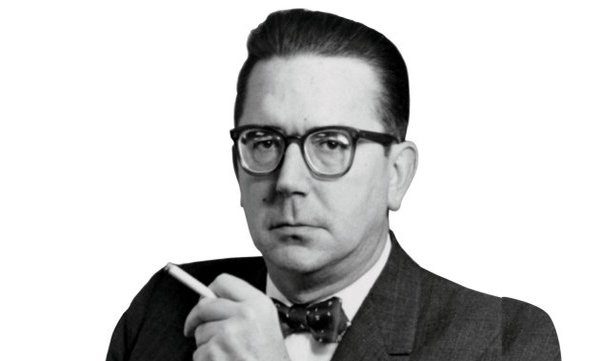
Read MoreEvery marketer should know Rosser Reeves. He was a highly successful advertising executive and the originator of the Unique Selling Proposition (also known as the Unique Selling Point or USP). In his 1961 best-seller Reality In Advertising, Rosser defined his industry-changing concept in three parts:
1. Each advertisement must make a proposition to the consumer. Not just words, not just product puffery, not just show-window advertising. Each advertisement must say to each reader: "Buy this product, and you will get this specific benefit."
2. The proposition must be one that the competition either cannot, or does not, offer. It must be unique—either a uniqueness of the brand or a claim not otherwise made in that particular field of advertising.
3. The proposition must be so strong that it can move the mass millions, i.e., pull over new customers to your product.
Rosser's influence continues to thrive and can be found in AMC’s hit television show Mad Men as he is the model for the professional accomplishments of the series' protagonist, Don Draper.
“No, sir, I'm not saying that charming, witty and warm copy won't sell. I'm just saying I've seen thousands of charming, witty campaigns that didn't sell.” ~ Rosser Reeves (1910 – 1984)
Sponsored By: Brand Aid
Read More