

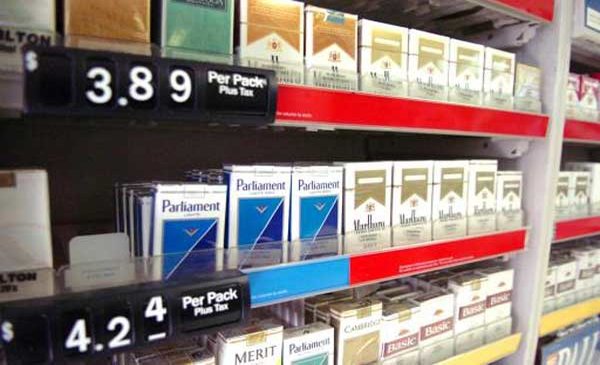
Ever wondered people still keep puffing away despite the fact that we’re better informed about the dangers of smoking than ever before? And despite the fact that there are no ads around? And despite the fact that you can’t consider smoking inside but instead have to relegate yourself to a corner with nothing but a seedy over-filled ashtray for company?
I wondered why smoking remained so prevalent, given all these discouraging factors. My intrigue helped inspire part of the world’s largest neuromarketing study ever undertaken. Project Buyology scanned the brains of smokers as they were exposed to all the stuff we thought should be encouraging them to quit smoking. Like dire health warnings on the cigarette packs and those nastily graphic anti-smoking commercials.
The shocking revelation from this part of the study was that, as you will have noticed yourself, the health warnings and anti-smoking messages have no effect at all in helping people give up the habit. Even more astounding is the finding that these health warnings and other ostensibly discouraging messages have the opposite effect entirely. Instead of helping people to quit smoking, they in fact encourage them to smoke even more. At least, this is what the most sophisticated brain scanning now tells us.
So, where does this leave us? If health warnings, a ban on tobacco advertising, and tons of education about the risks of smoking don’t do the trick, what can we possibly do to save the hundreds of thousands of people dying from smoking-related diseases in the United States every year? Do we need even bigger warnings on packs? Even more graphic anti-smoking commercials? Or something totally different?
The tobacco industry seems to get it. In fact, more than any other industry I know of. I tend to refer jokingly to the fact that the ban on tobacco advertising made the industry as clever as it is. Thanks governments everywhere! However, neuroscience might be the tool the world needs to help us understand the truth and lies about why we buy, and the science of the desire to smoke.
If you ask the Brits, they are inclined to think that even the explicit health warnings – displaying gangrenous limbs, mouth cancers and amputation – plastered on cigarettes sold in Australia, Brazil, Thailand and Canada still aren’t instructive enough. And they may be right. For ethical reasons, Project Buyology was not able to test people’s responses to these graphic images. But despite us not being allowed to test these pictures, I believe that they have no influence in persuading smokers to quit. The British believe in blank packs. Yes, you read it correctly. Packs with no graphics, logos or messages. Just pure blank cardboard. My response to this is go for it – if you want young people to smoke even more.
Just think about it: if you’re a 16-year-old, those white boxes would look pretty cool and enticing. Nothing written on them, glowing anonymously in the midst of the commercial clutter around them. A quiet patch in the consumer landscape that’s apparently not clamoring for attention. Those understated, unnamed items would make little show, and great success, of getting a kid’s attention. The anti-commercial tone would spike a sense of mystery and plug into the underground spirit that’s ever-present in youth counter culture. No, in my opinion, blank packs are not the answer.
I believe the health warnings need to change. We’ve discovered, through Project Buyology, that cigarette pack health warnings have cultivated a Pavolvian effect in smokers. Smokers are stimulated to light up when they see the images, the warnings, the typeface the messages come in. We need to disrupt the vicious cycle that has developed. The thing is, smokers don’t read the warnings. They see a graphic which, in around 12 seconds, makes them feel good as they inhale nicotine. This cycle can only be broken by changing the health warning formats, composition and design frequently – I mean really frequently. Large formats, no formats, picture formats, red formats, on the back, on the front – you name it. The changes need to be dramatic and enforced often. This way the brain will not manage to link the health warning with pleasure.
But this is not the full answer. We need a comprehensive strategy to combat smoking. Cigarette packs offer are just one opportunity to influence change. The decision to quit smoking is not made when you’ve purchased a pack of cigarettes. It’s too late. “Oh what the heck,” I can hear the smoker say. “I’ll just finish off these last cigarettes…”. A year later, they’re still hooked. The tactic has to be found long before the consumer gets to the counter. The war has to be won before it begins. We need to make cigarette smoking uncool. Seriously uncool.
Health warnings, bans and scary ads aren’t working. If they were, we’d have seen a decrease in tobacco sales. The fact is, we’re all influenced by trends. Let’s use this human foible for our own good. Perhaps uncool means releasing a brand around the anti-smoking message – even merchandising. I know tobaccofreekids, which I respect greatly and work with, is on the job. But extra muscle is needed. And this is where things get tricky. Individually run anti-smoking campaigns won’t achieve a big enough voice, just as small cigarette brands hardly exist these days. They simply don’t have the power to cut through the other advertising clutter, or the budget.
The answer is a global campaign. A campaign with one of those mammoth budgets, funded at national level, and run as a global brand, like Gillette or Dove. This way the message might cut through the commercial noise and reach the kids who we know to be the main target group for the tobacco industry. After all, it’s easier to get hooked for life if you’re smoking by the age of 21. Online, wireless and through the tons of entertainment channels, the global campaign could be shaped into popularity and accessed worldwide.
It’s a project which might seem overwhelming. And it means thinking globally instead of locally. But I think by now we realize how global our communities have become. The world is connected through Facebook, YouTube, and Google. The fact is, serious action is needed. The tobacco industry is armed with a killer marketing weapon – a weapon sponsored by well-intentioned governments and supported by legislation everywhere. So let’s treat anti-smoking activities like brands, and beat the cigarette companies at their own game.
The Blake Project Can Help: Disruptive Brand Strategy Workshop
Branding Strategy Insider is a service of The Blake Project: A strategic brand consultancy specializing in Brand Research, Brand Strategy, Brand Licensing and Brand Education




6 comments
Aurther
December 27, 2009 at 9:12 am
It looks likes globally smoking prevalence has declined as compared to the 60s. In fact S&P recently showed that in 2010 smoking in the States will declined by 4-5%.
I think what is happening now is a major shift of tobacco consumption to developing countries. Strategies discussed here need to be applied even more in countries like China with 350 million nicotine addicts and 3 million more added yearly.
Speaking as one from a developing country, taking the campaign to mobile devices amongst youths in countries like China, Africa and the rest of Asia will certainly make a positive impact in 2-5 years.
Cigtwits
January 4, 2010 at 9:53 am
This is a very provocative conversation. But the branding argument is back to front: i assumes that the marketing makes the smoker. So, if you change the brand, the warning, the packaging then they’ll stop smoking.
Marketing can influence how and what we smoke but the desire to smoke comes from somewhere else. Its like the traffic lines on the highway. The cars are coming anyway – the lines just help direct them.
The thesis of my book Cigarette Seduction and the general understanding of the tobacco industry – the reason why these executives consider themselves saviors and not scumbags – is that kids smoke because they need a certain magic power. It mirrors religion and our need for greater powers. That’s why the warnings don’t mean a thing – smokers believe the magic they get from their brand – or non-brand – is more powerful than all the nasty boo-boos the world may threaten. Especially if it states them on the pack.
Think about it – does religion really protect us from all the ills in the world? But as long as we keep praying, it seems to work. And when it doesn’t work, we pray anyway – to make us feel better.
The reason richer countries tend to cut down on smoking is because teens find more and now, cheaper alternatives. Prescription drugs are a big one. For example, smoking used to be the poor man’s Ridalin. Now, one visit to a shrink and you improve your grades, self-esteem and lose a few pounds to boot. Then there are a lot of non-prescription products we’d rather not discuss but are generally available in any nightclub in the US and Europe that have filled smoking’s role. We need to have this deep conversation about what smoking really is before jumping on this superficial branding makeover quest. Sure, branding has its place but without the structural debate it would be like reforming the Post Office by changing the look of its stamps.
I would also argue that e-Cigarettes will completely change this discussion, the industry and everything we are talking about within 3 years.
Jerry Holtaway
January 7, 2010 at 12:14 pm
It’s curious that the effect of warnings has only been measured on smokers – what effect do they have on people who don’t smoke yet are thinking about it (for example)?
@collentine
January 8, 2010 at 2:01 am
a very good and thoughtful post. Building an anti-brand for smoking is what is needed to decrease effect but the problem is it’s too wide of a concept and hard to rally people behind. Another alternative would be developing something that replaces cigarettes. Some do it for the nicotin kick, some for the social part and others to have something to busy themselves with. Replacing those needs could decrease the smoking.
Rinnell Garrett
January 10, 2010 at 12:45 am
Tobacco consumption is less likely to reduce because preventing ads on media is not enough. Its a trend that you learn from friends and family and there is no prevention on that.
Bhavana Jaiswal
January 14, 2010 at 7:28 am
I completely agree with the suggestion that we need to make smoking ‘totally uncool’. the fact is that nobody picks up smoking because of the ads – the habit is picked up due to exposure to others who smoke around you – peer pressure, seeing adults in the family smoke (the kid automatically feels its OK to smoke if he sees dad/mom do it), etc. Hence, what is MOST likely to work against smoking is also the same thing – peer pressure & societal exposure – being part of a society that looks down on smoking without making it look rebellious.
Comments are closed.