

Social values redolent of the ’50s, ’60s, and even ’70s are quietly being readopted by brands. These values are becoming more strongly expressed in the communications of brands plugged into the trend.
Why is this happening? How can you leverage this? Why is simple. As the global community endures crisis after crisis — natural disasters, an ever-present threat of political instability, shadows of war, and continual damage to already fragile economies — humans long for stability. We’re united in a need for something we can trust, rely on, and think about with joy.
Aside from the macro situation of global instability, there’s the micro situation of individual uncertainty. Close to 50 percent of marriages end in divorce. The strong family unit celebrated in earlier decades’ wholesome sitcoms and movies seems an anachronism. Nostalgia encourages parents and kids alike to think about the past in romantic terms. The past is an icon of stability.
How does this affect your Web site? Well, forget about innovative, flash graphics hearkening to 2010. Personally, I’m convinced most consumers are repelled rather than attracted to a sci-fi, futuristic approach. Go the opposite direction. Contribute stability to your customers’ lives by evoking the past in your communications.
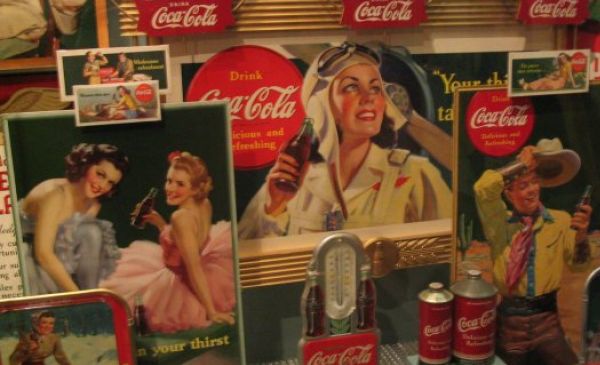
If your brand is an old, familiar favorite, dig out some promotional material from the archives. Look at those old graphics and catchphrases and try to integrate them in current communications.
I’m not saying you should ignore the contemporary realities that have guided your communications. But I’m definitely suggesting you exploit elements from your brand’s past that reflect the values of stable, prosperous times. The power of association is useful. Classic branding, uncomplicated by contemporary slickness, might draw customers into a warmer relationship with your brand. Reference to past decades’ branding will create the aura of a brand that’s been around for ages and will – take note – stay around for ages.
In inconstant times, consumers desperately want security. Trust and stability are attributes of a secure environment. Consumers are hardly in the mood for another Enron scandal, Swissair debacle, or Bernard Madoff controversy. Consumers now favor companies that reflect stability and honest endeavor. The criteria for gauging trustworthiness are based on individual gut feeling and instinct.
If you’re lucky enough to be caretaker of a brand that’s been around for a long time, leverage the fact. If you’re promoting a new brand, establish a style that appeals to consumers’ sense the past. Use nostalgia to create “classic” or traditional appeal. Manufacture the feeling the brand has been around forever. I’m not suggesting you lie; but I am encouraging you to note and be sensitive to social circumstances and transmit a sense of stability, reliability, and longevity to your brand. Encourage the sense your brand doesn’t intend to be a flash on the horizon.
Now, more than ever, make consumers trust your brand will be around tomorrow. If possible, let your brand speak for itself, using signals from its own past. It may sound old-fashioned, but old is new again.
The Blake Project Can Help: The Brand Positioning Workshop
Branding Strategy Insider is a service of The Blake Project: A strategic brand consultancy specializing in Brand Research, Brand Strategy, Brand Licensing and Brand Education



2 comments
Jason Finch
February 24, 2009 at 7:30 am
I think we’ll definitely see a return to the ‘feeling’ of the 50s, 60s and 70s. Social media, to some extent, will be partly responsible for that as people start to realise that the principles of social media are the same as those that existed in society and business back in those decades; it’s small-town local warm personal communications and a sense of community.
We’ve lost that sense of community over recent decades but social media, along with these ideas on stability and familiarity in branding, will I am sure lead us full circle back to how we all used to do business many years ago. I think the world is ready to go back to the future!
Jason Dressel
February 25, 2009 at 11:36 am
It’s no surprise that corporate communicators are turning back the clock and embracing decades long past.
Regardless of the era, historical advertising and messaging has been “in” lately. Brand identity and perception are highly based on reputation and heritage and, for most brands, focusing on any era other than the present right now can only be a good thing. Times of crisis question a company’s credibility and reputation, and turning to your company’s past can convey permanence and pacify shaken audiences by focusing on your company’s historical performance. It is not surprising that, recently, over one third of the advertisers in the New York Times have been referencing some element of their heritage.
We are living through one of those times when folks want insight, perspective, or just plain consolation. History is a message that pacifies by putting things in perspective. For example, companies are turning to the Great Depression to either show how they persevered and succeeded despite economic adversity or to give today’s consumers some common ground that puts their current condition in perspective. In fact, the Great Depression is one of the few things that is selling. As Brandweek pointed out a few weeks ago, sales of anything related to the Great Depression have taken off since the holiday season.
Cost is another unforeseen factor in the recent trendiness of historic advertisements since companies own their heritage and do not need to license it. It is cheaper to reuse old content that does not have to be licensed than to create new content. A number of companies have been turning to their archives to find old content to reuse in advertising. In fact, as highlighted by Steve Rubel’s blog, Micro Persuasion, IBM has even gone so far as to actually run old editorials from the New York Times that feature innovative company initiatives as advertisements.
It ‘s understandable to see why history has become such a hot topic in advertising today, and it will be interesting to see how long this trend lasts in the context of the economic climate. As Bruce Weindruch, Founder and CEO of The History Factory stated in Brandweek a few weeks ago, “Nothing will undermine a history-based campaign quicker than the present.”
Comments are closed.