
The Germans are coming. That was the clear message from TNS, which revealed that German discount retailer Aldi had grown its sales in the UK by 20% in the past three months compared with the same period in 2007.
If ever there was a good time for Aldi to make a move on the British shopper, it is clearly now (and the American shopper for that matter). With supermarket prices rising faster than at any time in the past 10 years, and an inevitable recession taking hold, Aldi’s low prices could enable it to grasp an opportunity to grow its UK market share from 2.9% to the 10% figure the company seeks.
Tesco is certainly taking the threat seriously. For the past 12 months, Britain’s leading supermarket has used a secret, mocked-up Aldi store at its headquarters in Cheshunt to develop Aldi counter-strategies. Finance director Andrew Higginson recently acknowledged that hard discounters such as Aldi were enjoying their ‘moment in the sun’ and Tesco is reported to be on the verge of announcing major price cuts across many of its own-label lines in direct response to Aldi’s growing popularity.
Aldi is now acknowledged as operating the leanest low-cost model in the world. The key to its success is low service and even lower choice. While the average big four supermarket will carry up to 40,000 SKUs in a typical store, Aldi keeps that figure at about 1000. This results in massive economies of scale, huge buying power and an enormous reduction in the operating costs of Aldi stores, which are smaller and require very few employees. Aldi also keeps its costs low by reducing profits – a typical store operates on gross margins of 15%, about half that of the big four British supermarkets.
The really interesting issue about Aldi, however, is its approach to brands.
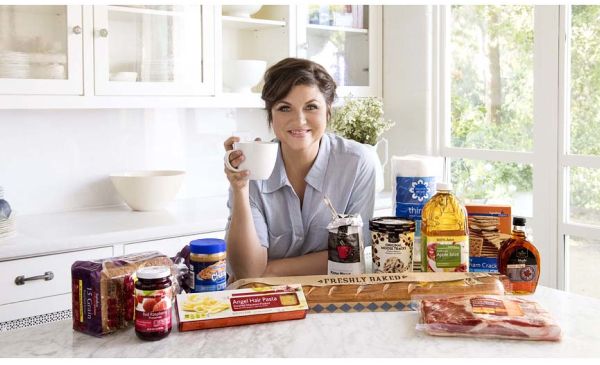
It has been able to reduce costs by building an offer around private labels and eschewing most manufacturer brands. At least 90% of products sold are own labels, usually produced by leading manufacturers but sold under a meaningless, house-brand name.
The major challenge that Aldi now faces in the UK is convincing the British public that a century of branded advertising has misled them, and that generic, unbranded consumer goods can be as good, if not better, than the more expensive and more familiar brands they usually buy. It’s a concept that German consumers have embraced wholeheartedly. Many of them believe products can be very good quality and very cheap. We British, on the other hand, have been more susceptible to the art of branding.
The empirical evidence suggests that the Germans have a point. Earlier this month, independent British market research revealed that Aldi’s unbranded offerings were deemed at least as good as their big-brand competitors in 14 out of 15 blind taste tests of major food categories.
Of course, as long as there have been brands, there have been blind taste tests. Coke vs Pepsi. Australian wine vs French. Remove the labels and see which one consumers really prefer. The standard marketing response to these tests has been to claim that consumers are never actually able to test the products ‘blind’, and therefore any data on quality that emerges is inadmissible in the court of the consumer.
But now we have a retailer that offers a real-life equivalent of a single, giant blind taste test. Combine that with a market of increasingly cynical, cash-strapped British consumers and Aldi’s vision of a shop in every British town starts to make sense. Or will the entirely irrational love of consumer brands repel this German invader?
30 SECONDS ON … THE ALDI LOW-SERVICE, LOW-PRICE MODEL
– Brothers Karl and Theo Albrecht took over their mother’s local store in Essen, Germany, in 1946 when they returned from World War II. In 1961, they opened their first Aldi. According to Karl, Aldi was founded on a solid anti-marketing principles: ‘At Aldi the customer is not king. We are providing not service, but mass production.’
– Aldi dominates its home market. More than 70% of German households shop at Aldi and it has a 40% market share. Aldi was cited as the prime reason for Wal-Mart’s 2006 withdrawal from the German market.
– Many big brands now manufacture for Aldi in various parts of the world. Nestle and Unilever are among the companies that supply the supermarket, and in 2000, Kellogg broke with years of tradition and signed a deal to supply five cereals to Aldi in Germany.
– Aldi plans to invest £1.5bn in a five-year expansion plan in the UK, which will increase its chain of stores from about 400 currently to an eventual total of 1500.
The Blake Project Can Help: Please email us for more about our private label strategy workshops.
Branding Strategy Insider is a service of The Blake Project: A strategic brand consultancy specializing in Brand Research, Brand Strategy, Brand Licensing and Brand Education