

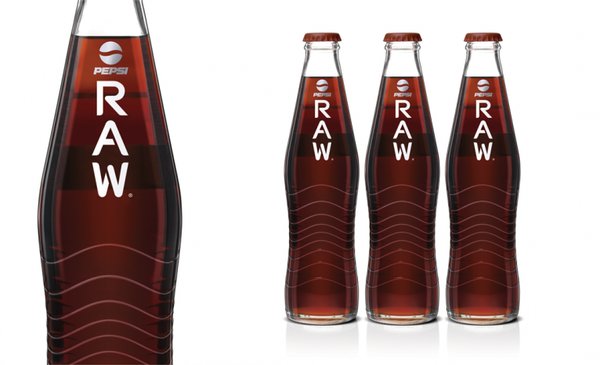
The Cola Wars have been raging for more than a century. But the ongoing fight between Coke and Pepsi has always been as much about the period in which each phase ensued as the two warring factions themselves.
At the start of the 20th century, for example, both brands waged war over their medicinal properties. In the 40s it was all about patriotism. In the 70s it was about youth. In the 80s it was celebrities and being cool.
This decade has proved no different. Both Pepsi and Coke have attempted to align their brands to the trends of the era. But this decade is more challenging than most, as Western markets become more interested in healthy products and more natural offerings.
Coca-Cola’s latest response is a campaign designed to challenge preconceptions of Coke as an unnatural beverage. The activity, which centers on a 30-second TV ad called ‘Pemberton’, emphasizes that Coke continues to be made to a 122-year-old recipe and is, therefore, free from modern preservatives or flavorings. According to Cathryn Sleight, Coca-Cola GB’s marketing director, the campaign originated from a discovery that Coke consumers ‘didn’t know that it has no added preservatives or artificial flavors. We felt it was important to reassure them’.
Sleight and her team are in a tight spot because of Coke’s secret formula. Despite recent seismic changes in consumer tastes, she cannot alter the formulation of Coke in any way. The last attempt to do that in the 80s resulted in marketing disaster. Trapped between a fixed offering on one side and a rapidly changing market on the other, the result is a campaign that will achieve none of its revitalization objectives. The message that Coke is not as unnatural as one might think, because it has no preservatives is not strong enough to take on the water and fruit drinks that now populate Coke’s category. At the same time, pushing the ‘122-years-old’ button is likely to speed up the dustification of Coke’s brand appeal.
Things are little better at Pepsi. Coke’s ancient rival does have the freedom to fiddle with its formula and has done just that with the launch of Pepsi Raw. Corn syrup has been replaced with lower-calorie cane sugar and a host of natural ingredients have been added to position Pepsi Raw as a more natural, premium beverage.
It is the first new product in the Pepsi range for more than a decade and the firm is sure that it is onto a winner. Marketing director Bruno Gruwez calls it ‘the most significant innovation from Pepsi UK in the last 15 years.’ This is a shame, because Pepsi Raw is a real dog of a product.
Pepsi Raw will always be perceived as an artificial confection for the masses because it is still, ultimately, a Pepsi. You can’t spend 100 years occupying the spot on the perceptual map marked ‘mass’ and ‘confection’ and then launch an extension that migrates to the exact opposite location marked upmarket natural beverage.
Pepsi might want that to happen, but it won’t – ever. It wouldn’t surprise me if Pepsi Raw disappeared within a few months, leaving its nervous marketers to prepare their resumes and the rationale for the failure of the product.
The cola category has had its time and now faces a decline, but Coke and Pepsi are finding it hard to face the truth that this is one battle neither can win. PepsiCo and Coke both owe their origins to cola, but their futures belong to a fresh generation of acquired brands that are naturally natural and genuinely real.
30 SECONDS ON … COCA-COLA AND PEPSI RAW
– Coke’s 30-second TV ad ‘Pemberton’ was created by Argentinian agency Santos and adapted for the UK market by Mother.
– The ad explains that because Coke has remained true to its 122-year-old secret recipe, invented by Dr John Pemberton, it contains no modern preservatives or flavorings.
– Coca-Cola also intends to print the line ‘no added preservatives or artificial flavors’ on all Coke cans and bottles.
– Standard Pepsi contains fructose corn syrup, sugar, artificial colorings, phosphoric acid, caffeine, and citric acid. Pepsi Raw contains apple extract, plain caramel coloring, coffee leaf, tantaric acid from grapes, gum arabic from acacia trees, cane sugar and sparkling water.
– Despite this, a 300ml bottle of Pepsi Raw contains only nine fewer calories than a standard Pepsi, at 117 calories compared with 126.
The Blake Project Can Help: The Brand Positioning Workshop
Branding Strategy Insider is a service of The Blake Project: A strategic brand consultancy specializing in Brand Research, Brand Strategy, Brand Licensing and Brand Education





2 comments
Florence Webb
July 18, 2008 at 9:26 am
If one of the crucial elements of an authentic brand is honesty, then we have to question “the real thing” designation of Coca-cola. Despite their repetition of the claim that Classic Coke is (as described above) “the original formulation”, the company in fact made a significant change to the recipe at or around the time of the New Coke marketing event.
At least in the U.S., they began sweetening the product with high-fructose corn syrup instead of the cane sugar or sugar syrup. Corn syrup is cheaper, but it’s easy to confirm that it does not taste the same. Just buy a Coke in the Carribean, where it’s still sweetened with cane sugar, and try it alongside a bottle from the mainland.
Even savvy marketers have been swallowing the Coke story whole, and spreading for them the disingenuous claim that the flavorings are the same and therefore the formulation is the same.
Jinjee Talifero
July 21, 2008 at 1:10 am
There isn’t one single raw ingredient in Pepsi Raw, trying to cash in on the growing popularity of the raw food diet.
Comments are closed.