

Emma Smith (not her real name) is the UK marketing manager for a well-known perfume brand. The brand has been on the market for eight years – an eternity in the fast-moving, constantly changing world of fragrances.
Each year it becomes harder for Emma to reach the aggressive sales targets that her US bosses set for her. In fact, she is struggling even to maintain the existing retail distribution and sales levels, let alone grow them.
Many of her key accounts are giving the brand much less prominence in store and some are even threatening to delist it because of slowing sales.
So when the merchandising team from TK Maxx called her earlier this year, she was intrigued. The senior buyer came straight to the point. He knew she had excess perfume in stock and he wanted all of it, immediately.
If they could agree on a price, he could arrange for an anonymous logistics team to collect the inventory the next day. All of Emma’s sales problems for the year would be solved.
She was amazed, but also a little concerned about the idea of her prestige perfume appearing in a discount store. The buyer reassured her. He listed all the major brands, some extremely prestigious, that supply TK Maxx.
He even offered to ensure that Emma’s perfume was not offered at any TK Maxx locations that she felt were too sensitive or likely to cause problems with her other retailers.
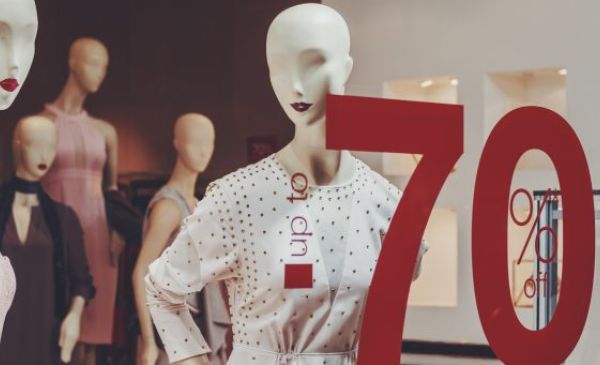
TK Maxx is the British affiliate of the US company TJX, which runs a global network of ‘off-price’ stores. Their appeal could not be simpler: customers are offered well-known brands with 20%-60% off their original price.
TK Maxx is able to do this thanks to its core competence: opportunistic buying systems. Unlike other department stores that commit to quarterly buying cycles, the merchandising teams at TK Maxx wait until suppliers and retailers have committed to their orders and then plunder both parties for excess, discounted and unwanted stock. Sometimes a store has ordered too much and TK Maxx buys the excess from them at a discount. Sometimes a supplier makes 100,000 items but can only sell 75,000.
Whatever the reason, the buyers at TK Maxx are constantly searching for famous brands at lower prices, and these items constantly flow into its stores on high streets across the UK.
So what should Emma do? In the short term, TK Maxx offers an answer to all her sales woes. While the retailer will expect a generous discount, the sale will still prove highly profitable. Emma will make her sales targets for the year and all will be well.
But in the long term, supplying a retailer such as TK Maxx is potential brand suicide. The discounter will invariably offer the perfume at a steep promotional rate and will certainly not present the brand in a manner consistent with its positioning.
Brand equity will be damaged. Just seeing the brand in a TK Maxx store is enough to harm many customers’ perceptions of the brand, let alone when they discover the heavily discounted price.
Sales of the perfume would flourish in TK Maxx, but the combined effect of reduced brand equity and cannibalization of sales at other retailers mean that Emma’s original, brand-consistent retail base would begin to erode.
A year after supplying TK Maxx, Emma would find herself in a perilous, but familiar, situation. Her brand has lost much of its luster and many of the prestige retailers are no longer interested in listing it. This time the call from TK Maxx is not intriguing, it is a lifeline. But the call never comes. The discounter’s opportunistic buying approach means that TK Maxx has moved on; there are stronger, fresher brands out there.
30 SECONDS ON… TK MAXX
– The first TK Maxx opened in Bristol in 1994 and there are now 197 stores in the UK and Ireland.
– TK Maxx’s parent company TJX is a $16bn operation with more than 2200 stores in the US and Canada.
– 11.8% of consumers voted TK Maxx as their most-hated brand, making it the most-hated high-street name, according to research by Joshua and Marketing.
– TK Maxx is the only major off-price retailer in Europe.
The Blake Project Can Help: The Brand Storytelling Workshop
Branding Strategy Insider is a service of The Blake Project: A strategic brand consultancy specializing in Brand Research, Brand Strategy, Brand Licensing and Brand Education



2 comments
Ted Grigg
April 20, 2008 at 9:45 pm
I once read a book (I forget when or where) that was written on the premise that some brands will last for centuries.
I suppose that may be true for some company brands that manage to keep innovating.
But product brands seem to have a life cycle. The time comes when creaming the brand may offer the best solution. But then the company must continue to create new products targeted to their core audience.
I don’t have all of the facts. But some brands do not have the legs to survive beyond a few years or a single generation.
I’d be interested in your recommendation here.
Mark Ritson
April 21, 2008 at 10:20 am
Ted has a good point. But as soon as you start to believe all that crap about brands having a half life you make it come true.
My point. Lets start brand management by assuming that brands can live forever. It may not be true – but many of the brands I am involved with are going strong after 250 years. The reason great brands fade away is the management, not the brands, are not not up to the job.
The second you start assuming some kind of half assed product life cycle is the moment it starts to come true…
Mark
Comments are closed.