Search


  • WWW
    This Blog

  • Add to Technorati Favorites

About The Authors

  • Derrick Daye
    Managing Partner
    Email Derrick
    Derrick has spent the past 18 years helping organizations release the full potential of their brands. His experience is as deep as it is diverse encompassing the disciplines of advertising, branding, sales promotion and public relations. Most notably he has worked with the White House Press Corps, Johnson & Johnson and the National Basketball Association.

    Call The Blake Project - here's my cell:
    813.842.2260
  • Brad VanAuken
    Chief Brand Strategist
    Email Brad
    Recognized as one of the world’s leading experts on brand management and marketing, Brad wrote the best selling book Brand Aid, the first comprehensive practical, ‘how-to’ guide on building winning brands. A much sought after consultant and speaker, he writes extensively for the business press and academic journals and is regularly quoted in trade publications.

Categories

Top Posts

Recognition

  • TypePad Featured Weblog
  • Ad Age Power 150

    Featured in Alltop 9 Rules Member

« Leveraging the Brand: Hallmark Case Study | Main | The Language of Branding: 'Brand Essence' »

January 12, 2008

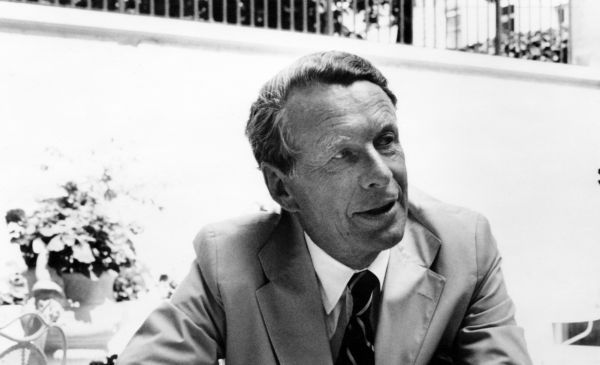
Ad Industry Icons: William Bernbach

William Bernbach
(1911-1982)

Doyle Dane Bernbach, New York
"I warn you against believing that advertising is a science." -- Bill Bernbach


After Bill Bernbach's death in October 1982, Harper's told its readers he "probably had a greater impact on American culture than any of the distinguished writers and artists who have appeared in the pages of Harper's during the past 133 years." Twenty-six years later, Bernbach's impact continues undiminished. And today he is recognized as No. 1 on Advertising Age's 20th century honor roll of advertising's most influential people.

Was it only yesterday that a "new" Volkswagen Beetle campaign appeared, one that proudly recalls its Bernbach lineage? Talked to advertising's creative stars lately? Or their mentors? It is still, "Bernbach, Bernbach, Bernbach." His influence is alive and well and ready to help lead the industry through the 21st century.

"Rules are what the artist breaks; the memorable never emerged from a formula." -- Bill Bernbach

As the single most influential creative force in advertising's history, Bernbach served as an inspiring father figure to some of advertising's most brilliant talents. His copywriters and art directors lived for his approval, competed to make his blue eyes sparkle, to produce work that would earn a Bernbachian smile. "What did Bill think?" was the question his Doyle Dane Bernbach people and clients would ask when new work was shown. Bernbach ruled.

From June 1949, when DDB opened its doors, until leukemia claimed him, Bernbach "edited" with inspired assurance, with arrogance ("You can't do this job if you're not arrogant," he said), with an open door, but without tantrum spikes. He had devised his art-copy team concept at Grey Advertising and brought to DDB a low-key, focused and dedicated management style that produced, along with pride, brilliant campaigns. The work endeared itself without resorting to advertising's cutesy-poo gimmickry or cuddly icons.

Bernbach, a conservative in his dress and manner -- some considered him a "square" surrounded by a world of hip -- would focus instead on richly empathic adult, fresh and relevant ideas. Unpretentious ideas. And the craftmanship would always be beautiful, as close to perfect as humanly possible. While examining an already short block of copy, Bernbach might say, "Make it a half-line shorter." He would toss off a headline and ask one of his creative stars to write "all the little words." It was UBA: the University of Bernbach Advertising.

"Advertising doesn't create a product advantage. It can only convey it." -- Bill Bernbach

When DDB came along, the TV commercial landscape was filled with devices and lively gimmicks. There were brain-pounding hammers for Anacin, Speedy Alka-Seltzer doll antics and dancing cigarettes for Lucky Strike and Old Gold. Enter DDB and an era of creative energy unknown since Ray Rubicam's Young & Rubicam explosive work of the 1920s. Bernbach insisted on first learning how his client's products related to their users, what human qualities and emotions came into play. Then the challenge turned to deciding how best to communicate those elements, in TV and print, and capture the consumer's understanding and support.

This is the process that spawned a new genre of TV commercials: Volkswagen's "Funeral" and "Snow plow" stories; "Mamma mia" and "Poached oyster" for Alka-Seltzer; "Visit to Grandpa" plus Laurence Olivier for Polaroid; "Italian wedding" for Rheingold beer; "Mikey" for Life cereal; "Gorilla" for American Tourister luggage; "Card game" and "Sharing," with Jack Gilford, for Cracker Jack; "Burning egg" for GTE; and stop-motion "Contrasts" for Jamaica Tourist Board. This latter technique from art director Bob Gage would shatter Hollywood's hold on the TV commercial "look." DDB's reel became an awesome advertising engine.

"Logic and over-analysis can immobilize and sterilize an idea. It's like love -- the more you analyze it, the faster it disappears." -- Bill Bernbach

Bernbach's leadership maintained a consistent tonal quality. For VW, starting with the efforts of Helmut Krone, writer Julian Koenig and Bernbach, there were 10 writer/art director teams on the account, and all matched VW factory philosophy with DDB advertising philosophy.

DDB also spawned new creative agencies, as George Lois, Julian Koenig, Ron Rosenfeld, John Noble, Mary Wells, David Herzbrun, Ed Vellanti, Roy Grace and Paula Green, among others, took the plunge. Some left and returned, among them Helmut Krone.

In print, VW's "Think Small" ad challenged our acquisitive tendencies even as the "ugly" Beetle became the first successful import car and the ad campaign altered advertising for all time.

For Polaroid, there was one triumph after another, including a tight closeup of Louis Armstrong so riveting that no headline or logo was needed to support its six lines of copy.

"There are few things more destructive than an unsound idea persuasively expressed." -- Bill Bernbach

A Bronx boy who graduated from New York University (B.A., '32) during the Depression, Bernbach felt lucky when he found a mailroom job at Schenley Distillers. There he met Grover Whalen, Schenley's chairman as well as New York's "official greeter" and prominent adclub officer, who soon took the bright young man under his wing. When Whalen left to oversee the 1939 New York World's Fair, Bernbach went with him as a staff writer. He parlayed this experience into a copywriter job, at age 30, with the old William Weintraub agency. In those days, copywriters tended to look down on art directors, but Bernbach didn't know that. When he met legendary designer Paul Rand, the agency's art director, the young copywriter was profoundly impressed. They would visit art galleries and museums during lunch breaks, and talk about art and copy working in harmony. Bernbach understood how such collaborations could liberate agency creative work.

When he joined Grey Advertising in 1945, he rose quickly from copywriter to copy chief to VP-creative director, and teamed Phyllis Robinson with Bob Gage, another Rand disciple, in order to perfect his new copy/art "team" concept. Bernbach feared that Grey's growth would lessen its appetite for "inspiring" work, so he began talking to VP-account supervisor Ned Doyle and Herb Strauss about opening a new agency. When Strauss dropped out (he later became Grey president), Doyle recruited Maxwell Dane, his friend and former Look associate. Doyle Dane Bernbach opened in Dane's 350 Madison Ave. space with Gage, Robinson and a half-dozen others. Doyle ran the account side; Dane, the consummate manager, ran the business/personnel side. And both stayed out of Bernbach's way.

"Research can trap you into the past." -- Bill Bernbach

During his 33 years with DDB, when the agency achieved $1.2 billion in billings, Bernbach saw it change the dynamics of advertising and America's cultural landscape. Krone said, at Bernbach's death, "He elevated advertising to high art and our jobs to a profession."

Bernbach's advocacy of advertising as art was grounded in the radical notion that the public had to be respected. Underlying respect would encourage favorable reactions to intelligent and imaginative advertising.

Its leader's death eventually led to an agency breakdown and, in 1986, DDB merged with Keith Reinhard's Needham Harper Worldwide to become part of the new Omnicom Group, which would also include Allen Rosenshine's BBDO Worldwide. Nevertheless, because Bernbach's spirit survives, DDB's 37-year life span provides a strong foundation for advertising's continued progress in the 21st century. He still inspires many a dream-filled creative journey. 

Sponsored By: Brand Aid

TrackBack

TrackBack URL for this entry:
http://www.typepad.com/services/trackback/6a00d83451b74a69e200e54fef86a18834

Listed below are links to weblogs that reference Ad Industry Icons: William Bernbach:

Comments

If you want to read more about William Bernbach:

A Conversation with William(Bill) Bernbach(1969)

http://d.hatena.ne.jp/chuukyuu/20070515/1179170248

Verify your Comment

Previewing your Comment

This is only a preview. Your comment has not yet been posted.

Working...
Your comment could not be posted. Error type:
Your comment has been saved. Comments are moderated and will not appear until approved by the author. Post another comment

The letters and numbers you entered did not match the image. Please try again.

As a final step before posting your comment, enter the letters and numbers you see in the image below. This prevents automated programs from posting comments.

Having trouble reading this image? View an alternate.

Working...

Post a comment

Comments are moderated, and will not appear until the author has approved them.

Partners

  • +2 marketing Consultants FREE Marketing Magazine Subscriptions Scent Marketing Institute CI Sense Free Subscription

Prefer email to a blog?

  • Sign up below and we'll send new posts to your email inbox. We'll never spam, sell or trade your address.

    Enter your email address:

    Delivered by FeedBurner

BSI on your Phone or Blog

  • Our Feed In A Widget

    Get this widget from Widgetbox
  • Our Feed On Your Phone

Featured Reading

2009 Brand Education Seminars


  • The Blake Project offers comprehensive seminars on many key branding topics. They are designed to educate and empower executives, brand managers and marketing professionals to release the full potential of their brands. Download 2008BrandEducation.pdf (675.2K)

Subscribe to the Brand Management Newsletter


  • A leading source for brand management insight, strategy and advice for marketing oriented leaders and professionals.


Follow BSI

Top Ten

  • Benefits of Building Strong Brands
    1. Increased revenues and market share
    2. Decreased price sensitivity
    3. Increased customer loyalty
    4. Additional leverage with vendors and retailers (for manufacturers)
    5. Increased profitability
    6. Increased stock price, shareholder value and sale value
    7. Increased clarity of vision
    8. Increased ability to mobilize an organization's people and focus its activities
    9. Increased ability to expand into new product and service categories
    10. Increased ability to attract and retain high quality employees