
What every entrepreneur, geek, brand manager and marketer needs to know about trademarks…
If you Google “generic trademarks”, you’ll find a list on Wikipedia that includes, “aspirin, bikini, brassiere, cola, crock pot, dry ice, escalator, granola, heroin, hula hoop, jungle gym, kiwi fruit, pilates exercise system, trampoline, videotape, Webster’s dictionary, yo-yo, and zipper”. Each of these trademarks was worth many millions of dollars, and then, poof, it belonged to everyone.
Some people are worried about this. Jeroen send me a note and asked me to riff about it… it even has a name: genericide.
In 1999, I invented a trademark and wrote a book about it. Yahoo still owns the trademark in Permission Marketing®, but a quick search will show you more than a million matches for the expression. What’s going on?
I had to make a decision. I could have pushed the world to call the ideas I wrote about, “Permission-based Marketing”. Or, I could have been really flexible and encouraged people to call the approach the same thing I did. I figured it was better to be the coiner of a phrase used by millions than to have a little corner of the world all to myself.
And that’s part of the paradox of a trademark.
The purpose of a trademark is to help consumers by allowing them to be certain of the source of a good or service. When you go to the store and buy some Mentos, you know you’re getting real Mentos, the kind that fizz really well with Coke, not some sort of inferior of mento with a small ‘m’. The trademark doesn’t just help the Perfetti Van Melle company in Kentucky, it helps you too.
If everyone knows your trademark, it means that your idea has spread. It means that people are interested in what you sell and may very well decide to buy it from you.
In order to make it a trademark, most lawyers agree you need to follow a few superstitions (superstitions because there’s no official manual with definitive answers). The first is that you ought to make it clear to the world that you know it’s a trademark, that it indicates your product comes from a specific source. So, putting ™ after your mark helps… and once per page/interaction is generally considered to be enough. So you don’t have to repeat the ™ over and over and over again in your copy or brochure. It’s tacky.
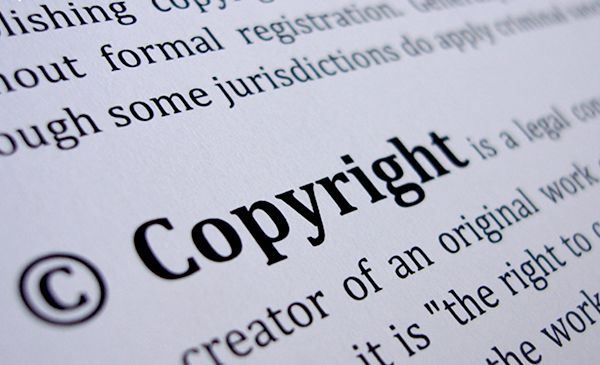
Adding (c) after your name is just dumb. It doesn’t mean a thing.
You can trademark just about any word or phrase, but that doesn’t mean it will hold up. The best trademarks are ‘fanciful’, words like Yahoo! or Verizon. Next down the list are words that a bit descriptive, like Woopie Cushion, Wikipedia or JetBlue. The worst kind of words are descriptive. Yes, you can trademark the brand American Motors, but don’t expect it to be particularly valuable or long lasting.
Some lawyers will get all excited and encourage (demand!) that you register your trademark. This involves paying a bunch of money, filing a bunch of forms and earning an ® after your name instead of the ™. While the ® does give you some benefits by the time you get to court, it doesn’t actually increase the value of your trademark. And you can wait. So, when you come up with a great name, just ™ it.
One thing that has changed dramatically about trademarks is the world of domains. If you own heroin.com, the brand becoming generic doesn’t hurt you so much, because you’re the only one who gets the traffic from the domain.
But now we get to the juicy part. Let’s say you’ve invented a trademark and you fear it will become generic. What now?
My first advice is not to worry. By the time aspirin became generic, the guys who developed it were super rich. If actively protecting your trademark is going to get in the way of making your idea spread, the choice is obvious–spread the idea.
Every trademark that turns generic does so for the same reason: because it’s the easiest way to describe something. People didn’t say, “That’s a sexy Bikini® brand bathing suit.” Because the idea itself was bigger (or smaller) than a bathing suit, the new thing needed a name. And the name we picked was bikini.
An iPod is an iPod, not an iPod brand mp3 player. This is a long-term problem for Apple, and suing people who use the word ‘pod’ to describe other devices isn’t realy going to help them. The challenge they have is that they invented a brand name for an item that needed a word. Of course, it’s not just a problem, it’s a huge advantage.
If you had the chance to work at Apple five years ago, knowing what you know now, what would you do? Pick a name like “The Deluxe Apple Brand MP3 player?” Would you hassle the folks who coined the term “podcast”? Not me. Yes, it’s a great idea to think big, to ensure that you don’t make mistakes early on that haunt you later. But no, I don’t think you should spend a lot of time imagining the bad things that will happen if you succeed and your idea and your name become intertwined.
You can Digg this article if you click here. Notice that Digg is a verb, because there’s really no easy way to say, “You can recommend this article in a branded social news service like Digg™ by clicking here.” So Digg gets the power of spreading their idea. Nobody says, “Reddit this article by clicking here.”
Back to the paradox. Would you rather be Digg or Reddit? Is it better to have Google’s problem (notice I used “Google” as a verb in the second paragraph?) or to be ask.com and never get talked about?
The best thing you can invent, as far as I can tell, is an idea that needs a name. When they invented the Jeep®, there was no such thing as the SUV. The Jeep became the name for that idea. The lawyers at Chrysler worked superhard to keep the brand from becoming generic. When the engineers cooked up the Xerox®, they had the same problem. Now, people are happy to call it a copier.
You can recover from impending genericide. What you can’t recover from is a clumsy name, or hindering your idea so it doesn’t spread or coming up with a slightly better idea for something that already has a quite good enough name and idea.
Disclaimers: I’m not a lawyer. I don’t even play one on TV. If you rely on my legal advice, you’re getting exactly what you paid for. I called this post “Godin on Trademark” as a riff on Nimmer on Copyright. The irony, of course, is that “Nimmer” became the almost generic phrase for expertise on the topic… you can look it up in Nimmer.
The Blake Project Can Help You Grow: The Brand Growth Strategy Workshop
Branding Strategy Insider is a service of The Blake Project: A strategic brand consultancy specializing in Brand Research, Brand Strategy, Brand Growth and Brand Education